
Sandhill Season: Two Seasons Documenting Florida’s Sandhill Cranes
Sandhill Cranes are a prehistoric link to the past and a symbol of true perseverance in an ever-evolving landscape. For the last two seasons, I’ve been documenting these iconic birds in the Central Florida region. Each season has brought its own unique triumphs and heartbreaks. But through it all, one thing remains absolutely certain: the Florida landscape just wouldn’t feel the same without these birds or the sound of their bugles echoing in the distance.
To truly understand why I appreciate these birds so much, it helps to look at what makes them so incredibly unique. When I call them a prehistoric link, I mean that quite literally. According to fossil discoveries, Sandhill Cranes have called North America home for an estimated 2.5 to 10 million years!
They are also strictly monogamous, mating for life when the odds are in their favor. With a lifespan ranging from 20 to 40 years, keeping a partnership alive that long is quite a feat! Standing an impressive four feet tall with a massive wingspan, they are fiercely protective parents. They won't hesitate to defend their territory and young against even their most formidable prehistoric wetland cohabitants—the American alligator.
While there are several subspecies of Sandhill Crane that migrate long distances each winter, the specific birds I am introducing you to are permanent Florida residents. Some stay in the same territory year-round, while others grace our local waters and preserves specifically for the nesting season.
2025: A Season of Abundance
The 2025 season presented my very first opportunity to document Sandhill Cranes in Central Florida. In the early winter months, resident pairs began arriving at their preferred nesting destinations, staking out their territories and preparing for the breeding season. Younger cranes without a mate gathered in large groups on the ground—known as a sedge of cranes—where they practiced their intricate dancing and courting rituals, preparing for the day they would reach breeding age at around three to five years old.
Near me, many residents of The Villages get a front-row seat to this entertainment, sharing their manicured lawns, golf courses, backyard preserves, and roadways with these long-time residents.
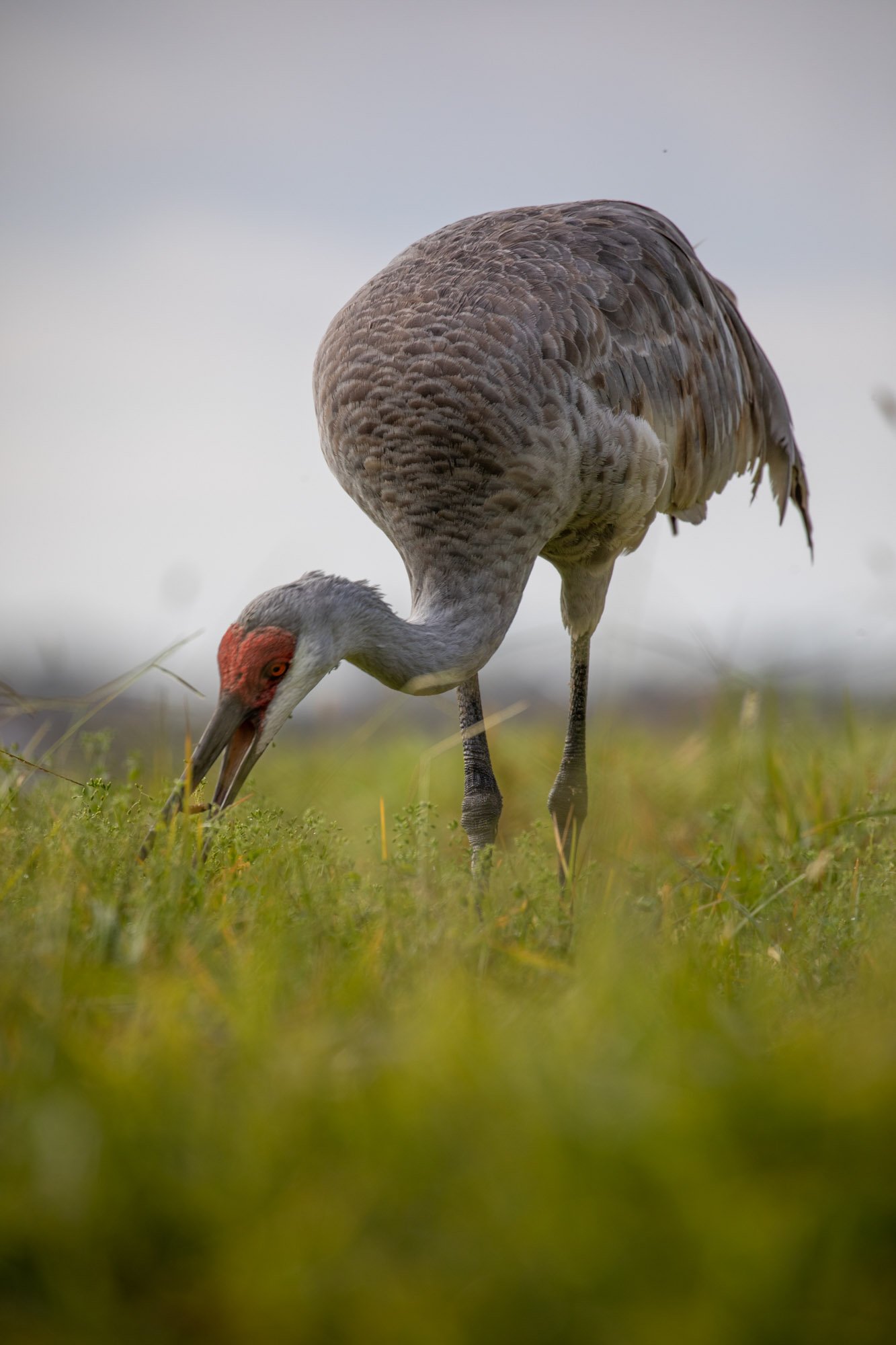
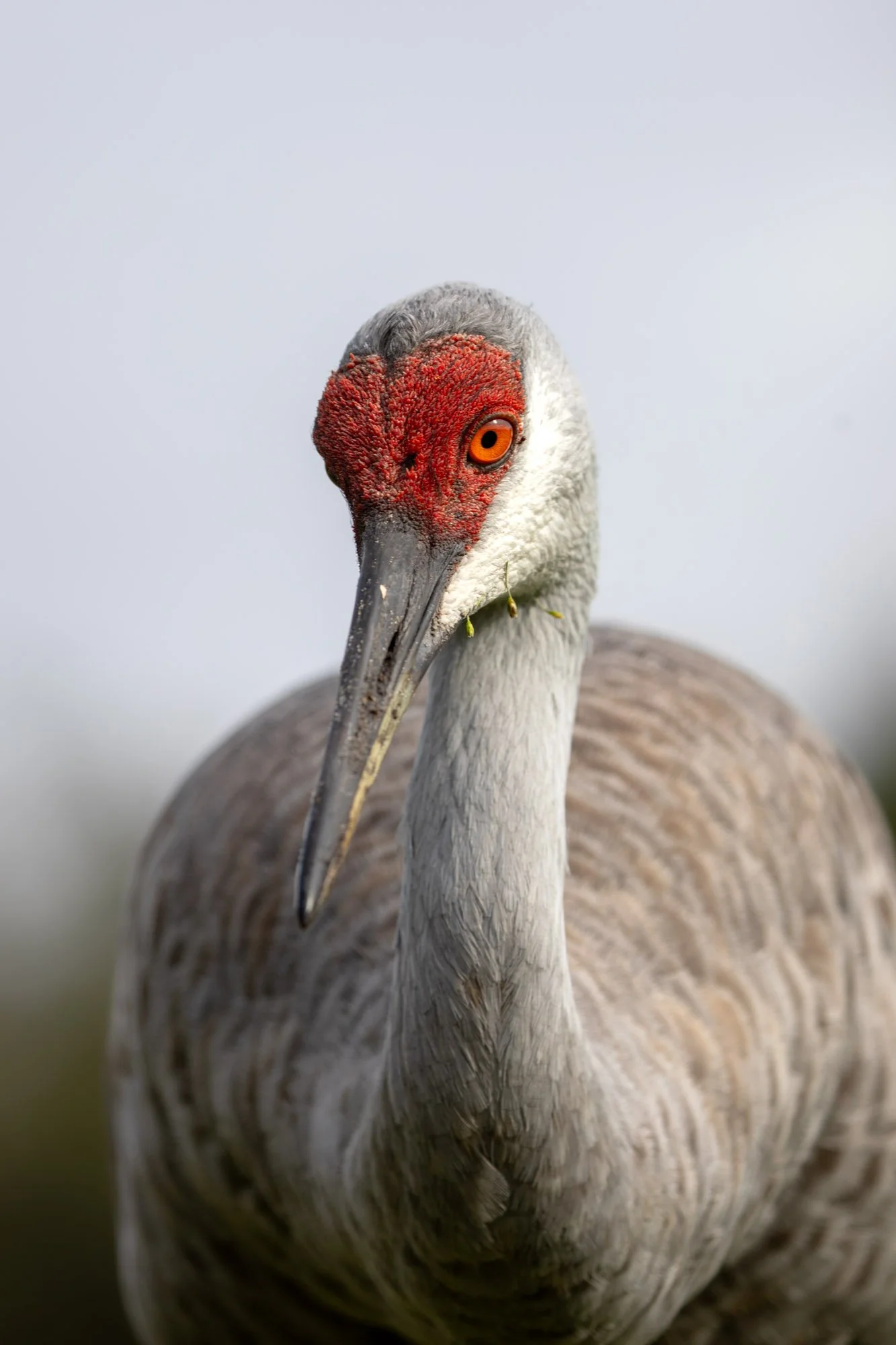
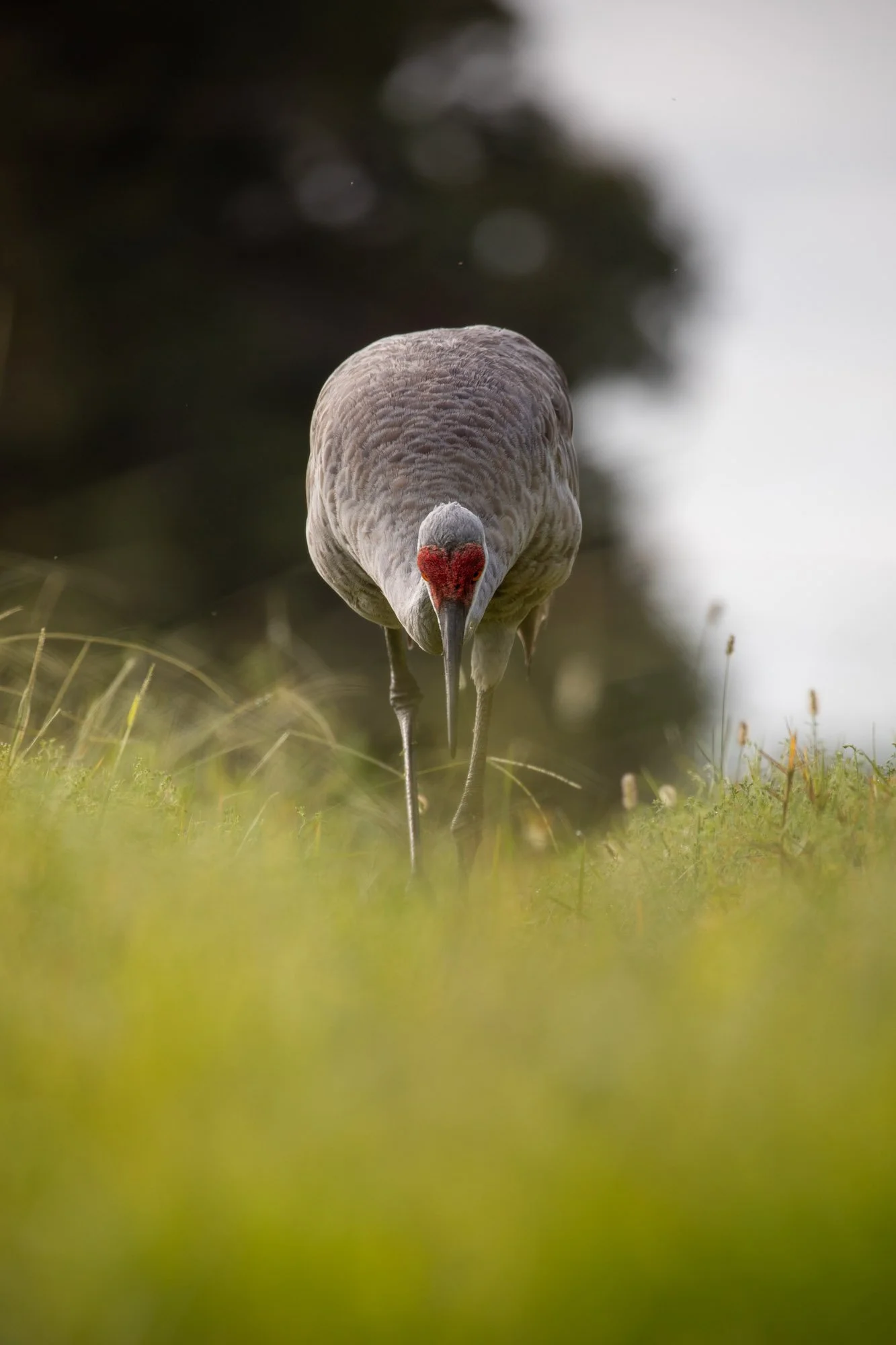
My first photographic opportunity of the season happened during a morning visit to the Orlando Wetlands. Because it was still early in the year, the previous year’s offspring were still traveling alongside their parents. Though they were nearly indistinguishable in size, they provided fantastic photo opportunities as they casually foraged in an open field. I sat down in the grass, waited for eye-level perspectives with clean backgrounds, and captured some portrait-style compositions that I was pleased with.
Interestingly, I noticed how these birds act as natural gardeners; as they probe the earth for insects and roots (also providing some excellent aeration), native seeds catch in their dense feathers to be distributed miles away later on.
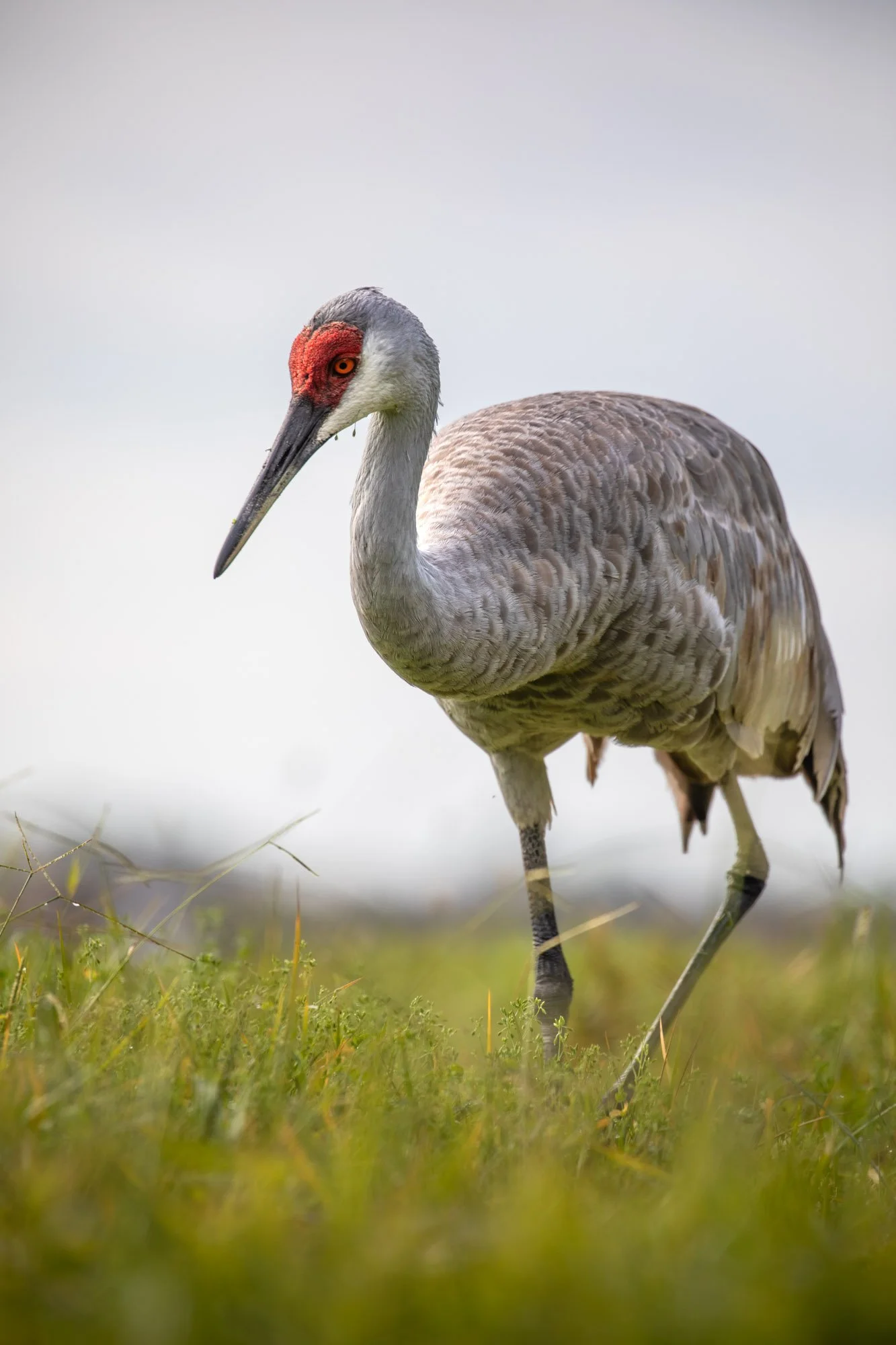
When the official nesting season rolled around, photography opportunities were plentiful. The historic hurricanes of late 2024 had left Florida's wetlands completely saturated. This abundance of deep water created the ideal environment for nesting, offering a natural moat-like barrier to keep ground predators away from the eggs.
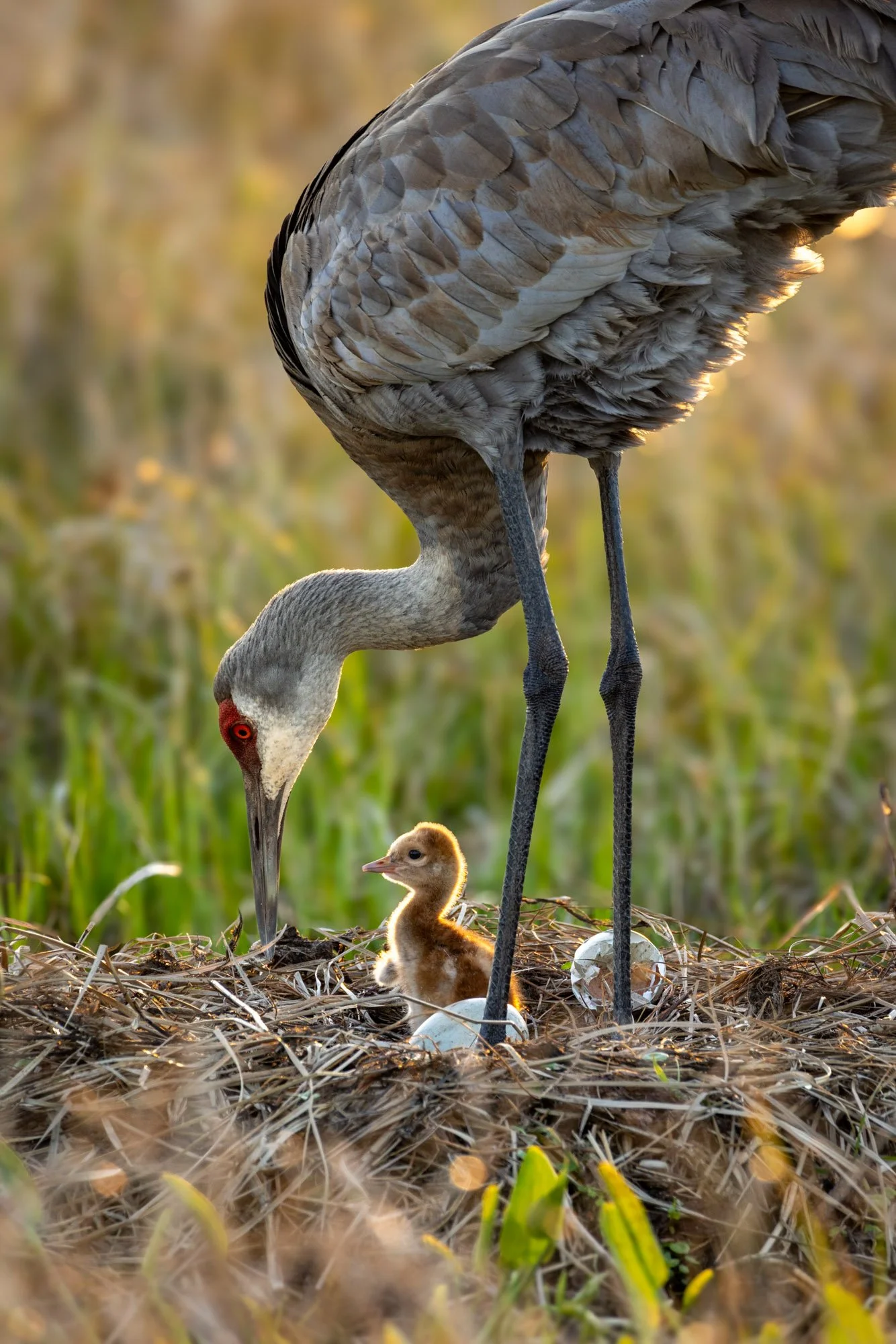
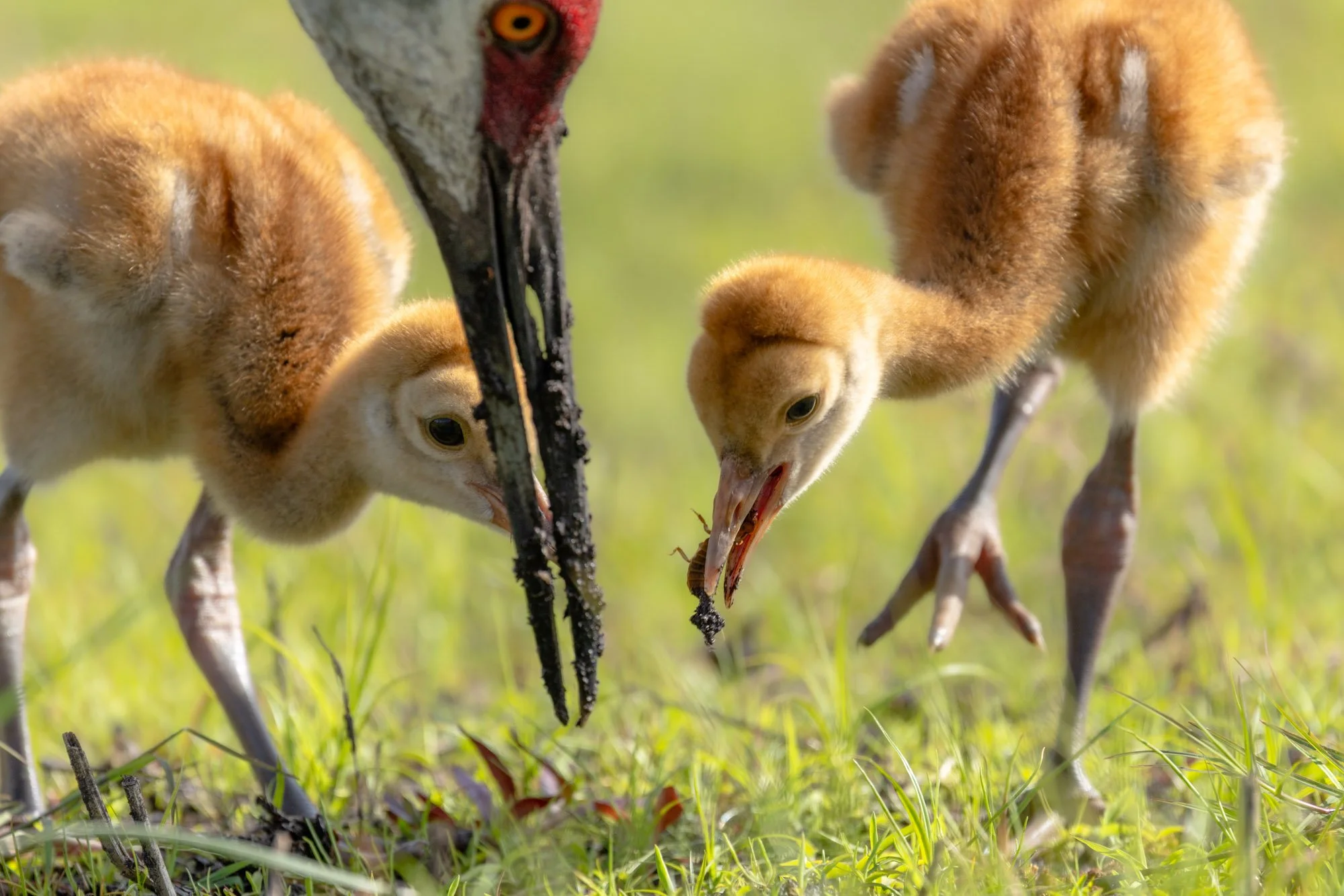
One particular pair that I documented weekly built a beautiful nest, successfully hatching and fledging two healthy chicks. During this time, I spent hours testing my camera settings, finding the best angles, and mapping out the times of day to capture the family’s daily routine. I watched in awe at the sheer variety of items on the menu for these little golden fluffballs, photographing the parents feeding them everything from spiders and frogs to entire snakes.
2026: The Trial of Fire and Ice
Heading into the 2026 nesting season, I had a notebook full of creative goals. However, nature threw a relentless series of challenges at our local cranes.
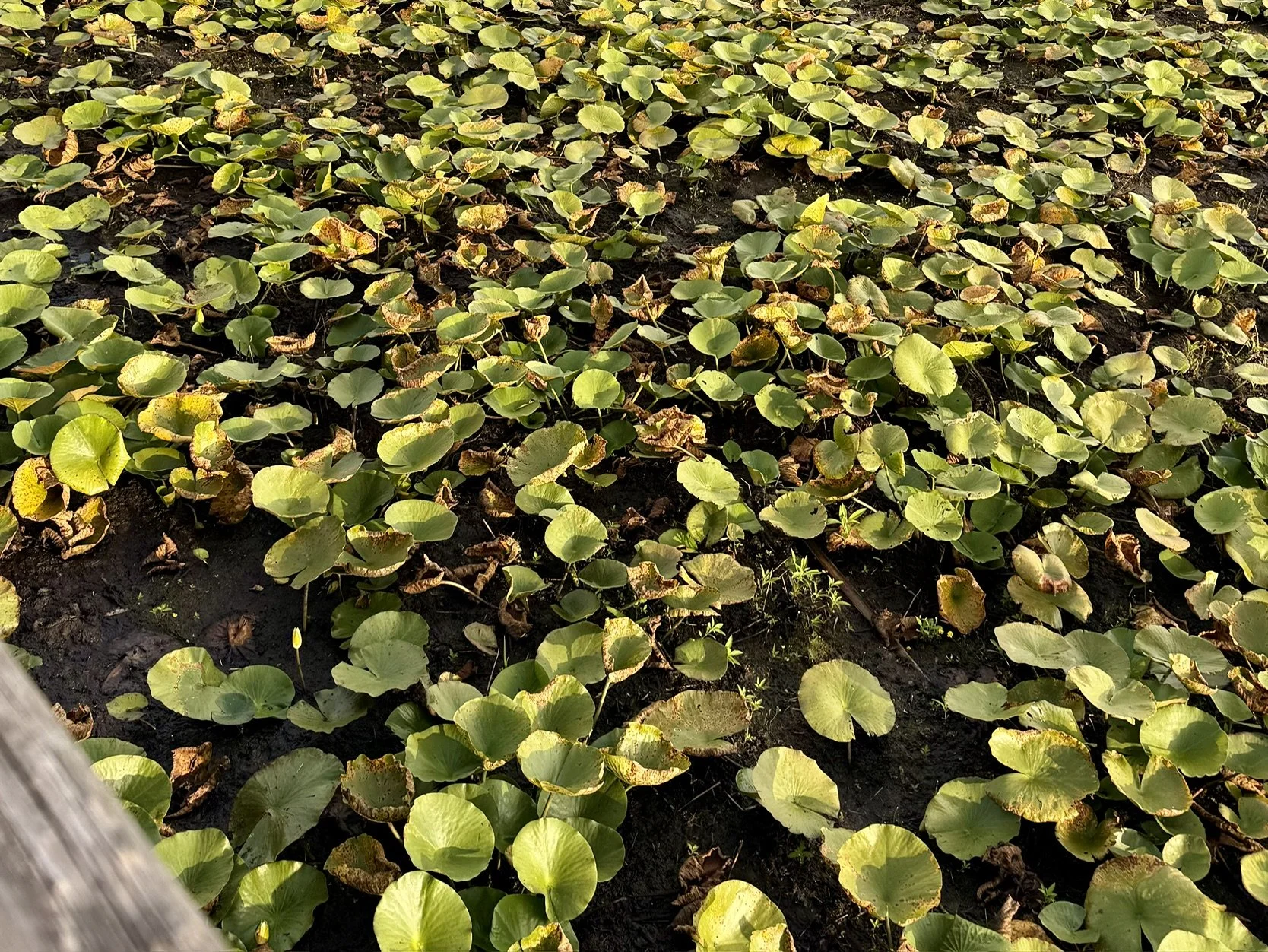
Early in the season, a historic freeze swept through Central Florida, threatening the success of early egg incubation. Immediately following the frost, the region was plunged into a severe drought. Water levels dropped (and remain) dangerously low, making those ideal, deep-water nesting locations incredibly difficult to find.
Because of the shrinking habitat, territories that were fiercely guarded the year prior had to be compromised. My local resident pair became more lenient, sharing the small lake they used to claim entirely as their own with a second pair.
Driven by the low water lines, my pair initially attempted to build a nest far out in the distance, but abandoned it a few weeks later. Their second attempt was even more concerning when they built the nest right against the lake’s main walking path, putting them within just a few feet of local passersby. To respect their space and minimize stress on the incubating parents, I chose not to photograph them during this period, opting instead to visually track their estimated lay dates from a distance to predict a potential hatch.
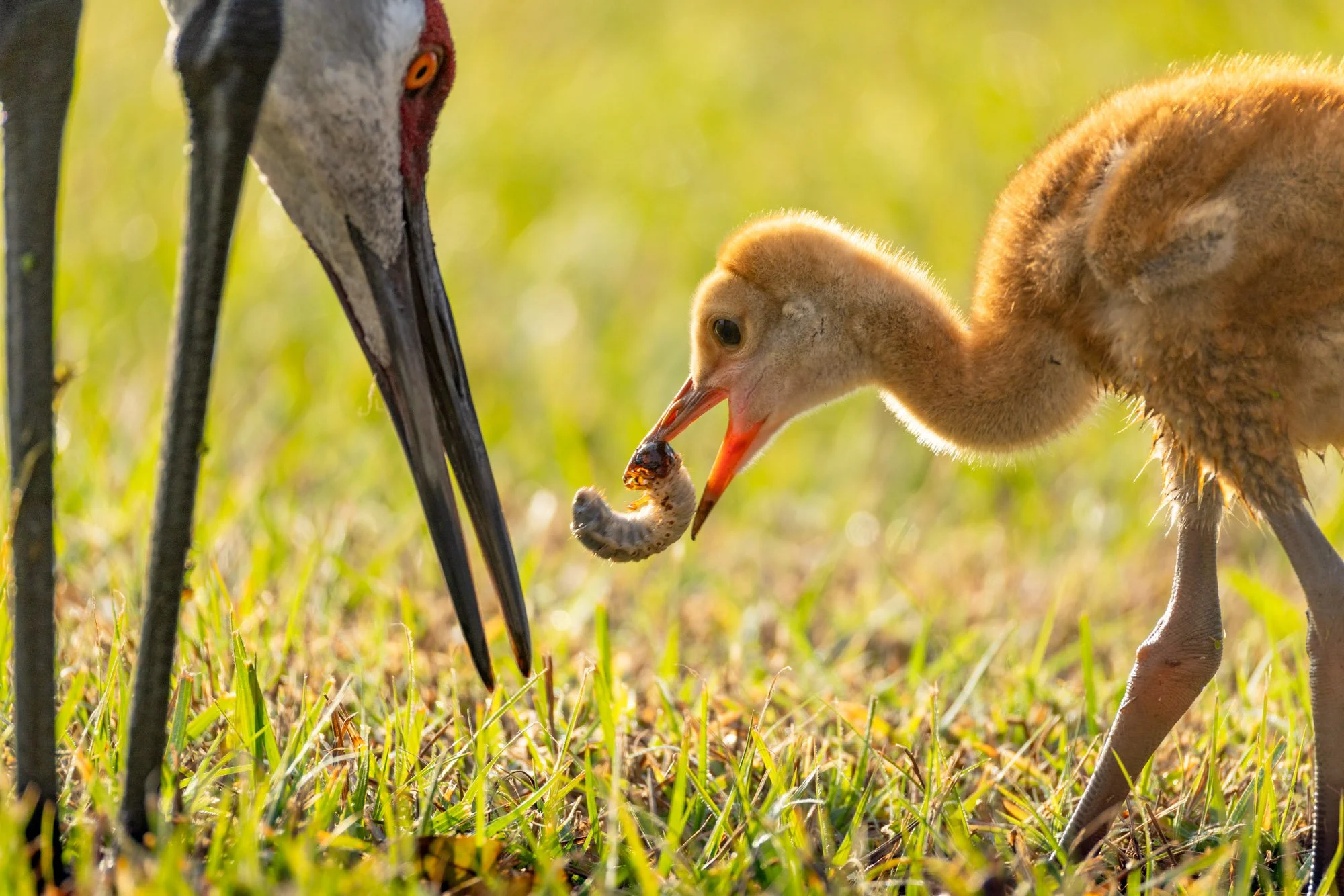
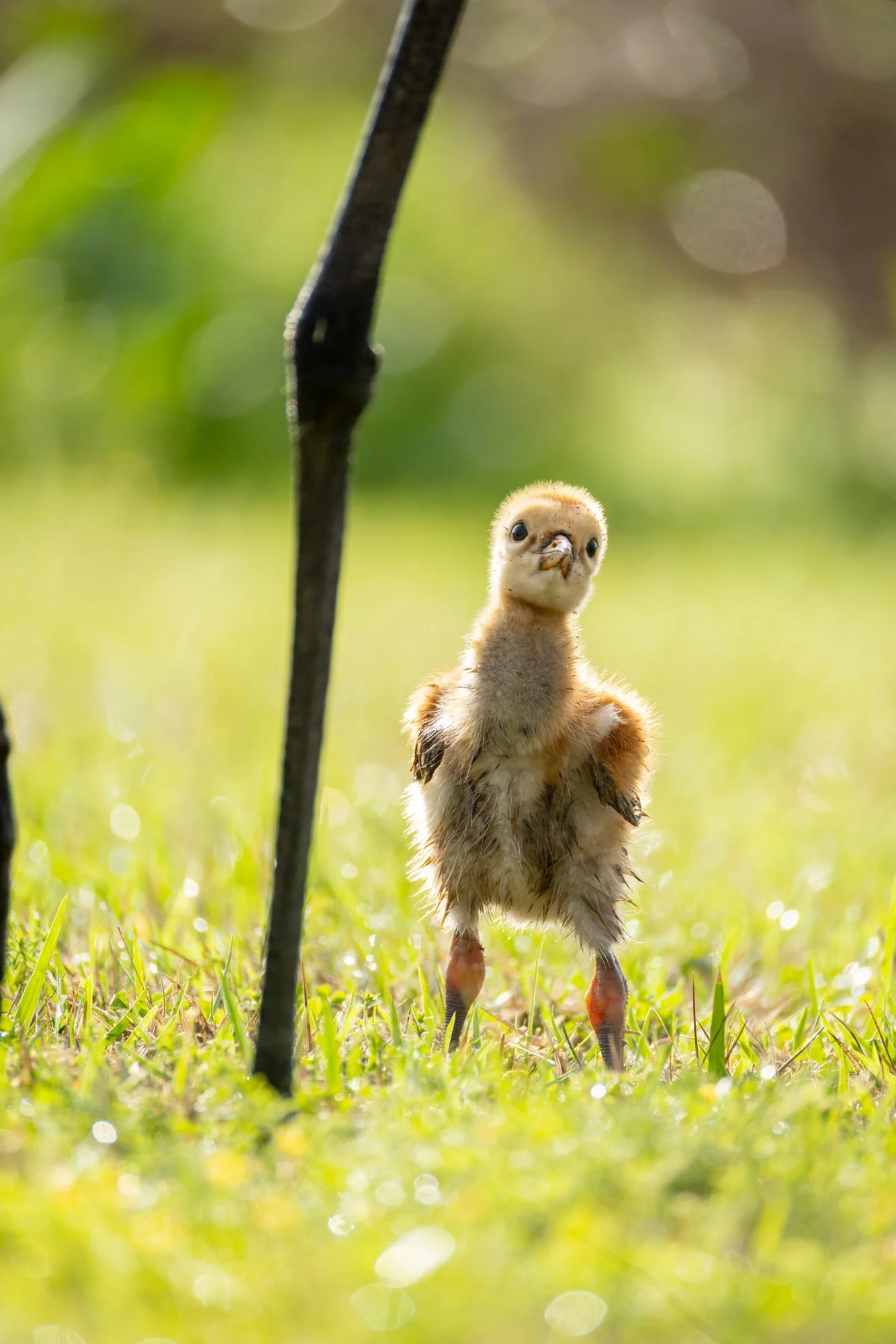
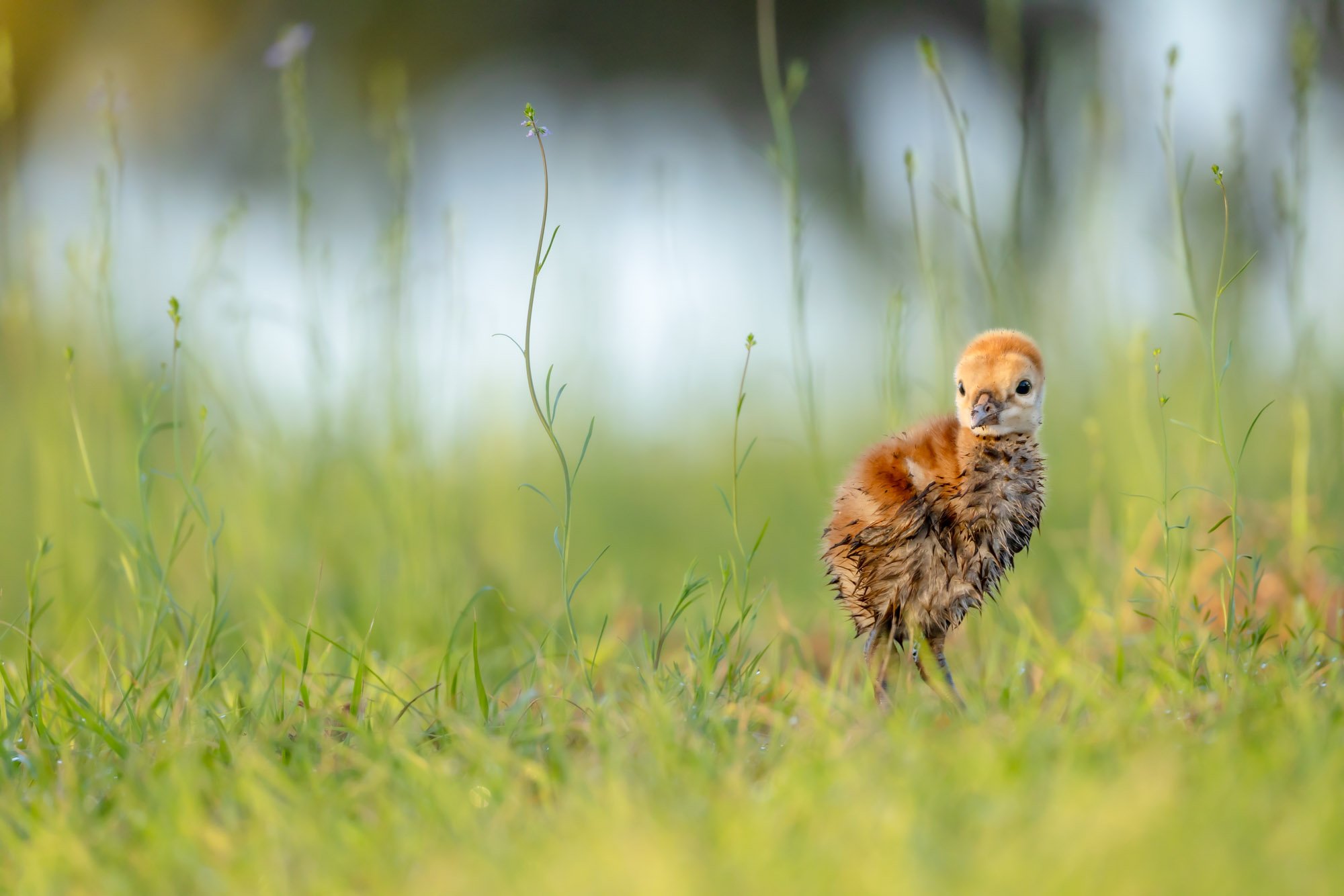
When the time finally came, the chicks hatched just a few days later than my estimates. By day three, the tiny colts began their daily treks through the shallow marshes into the open fields, mimicking their parents as they learned to forage for mole crickets, grubs, and roots.
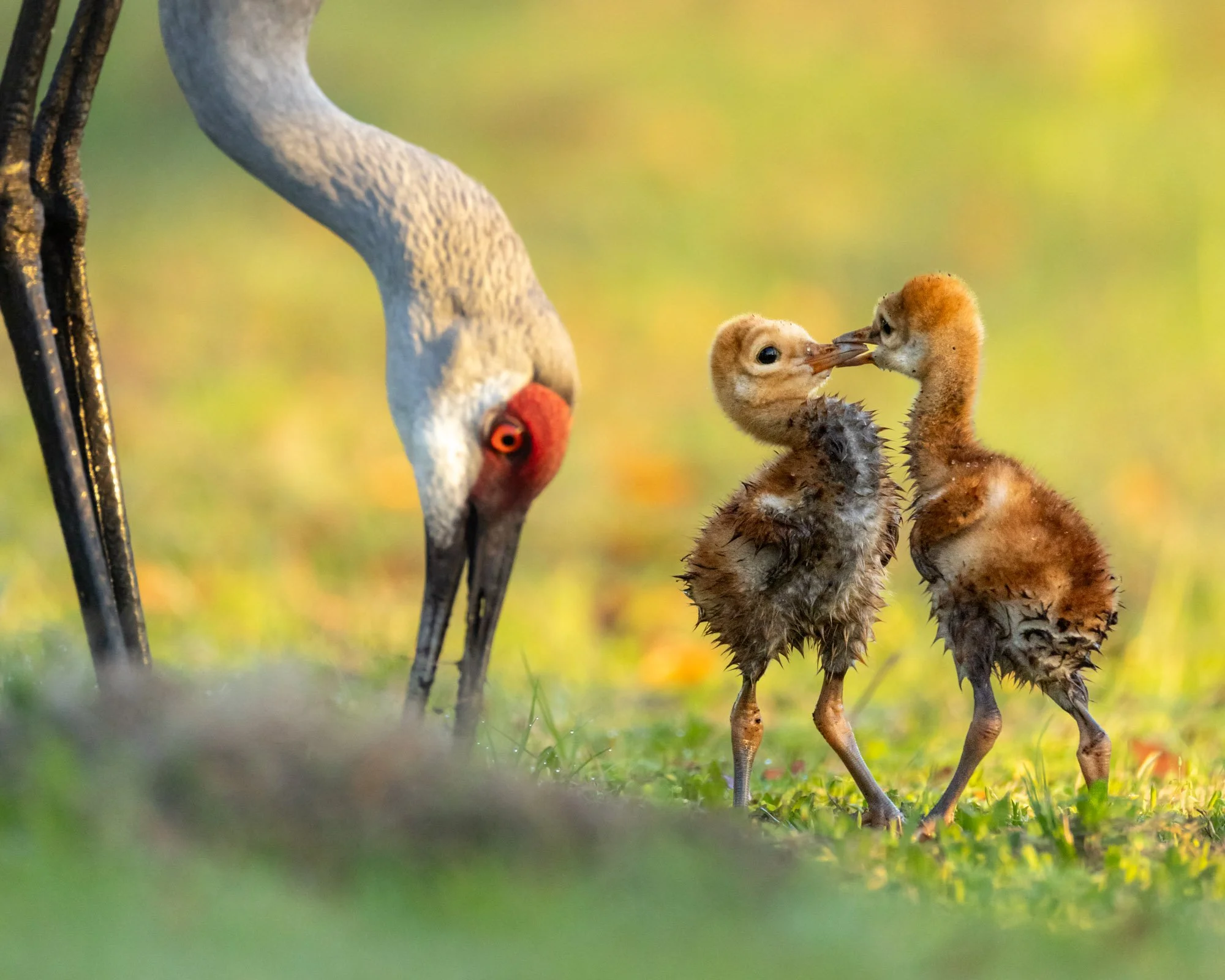
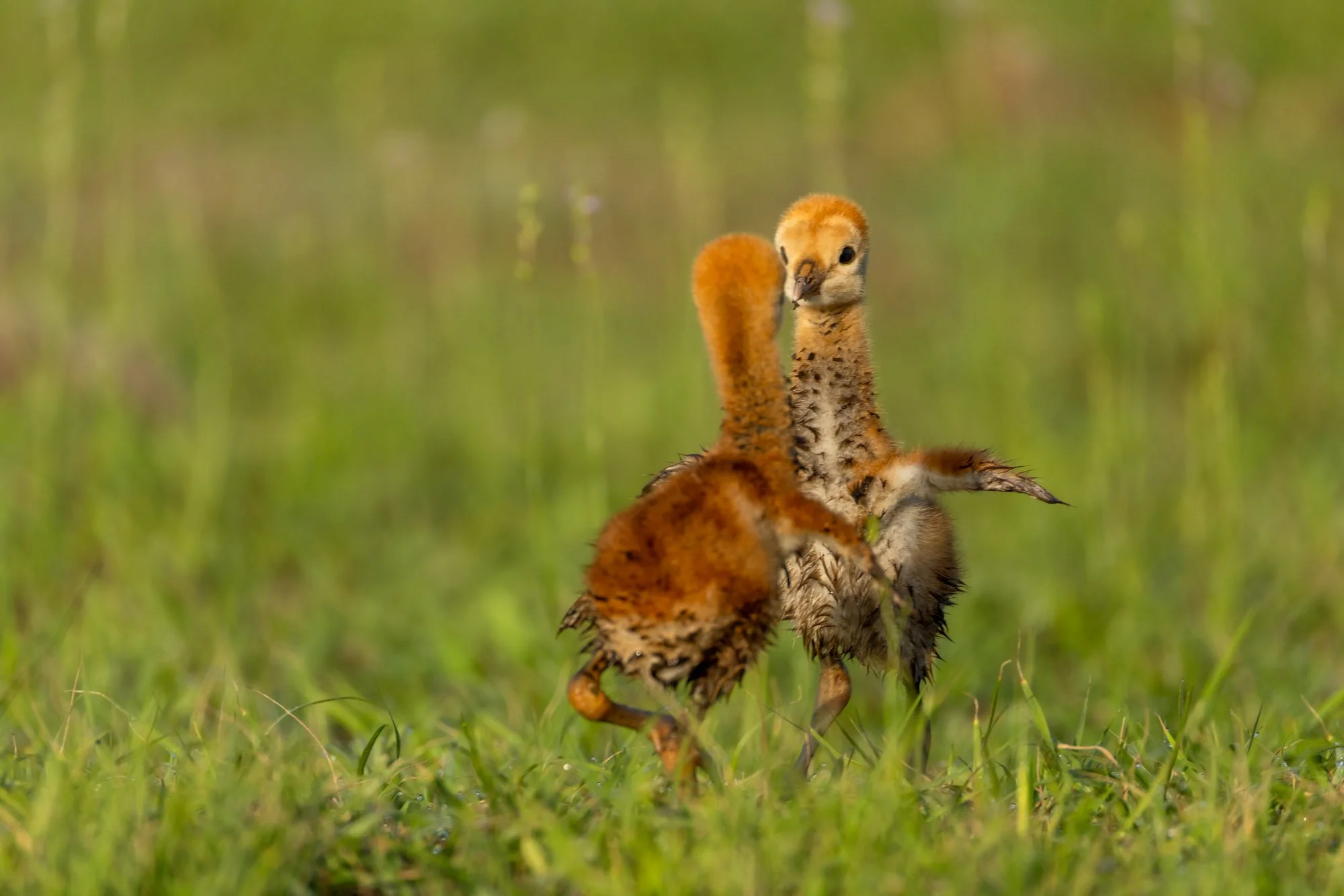
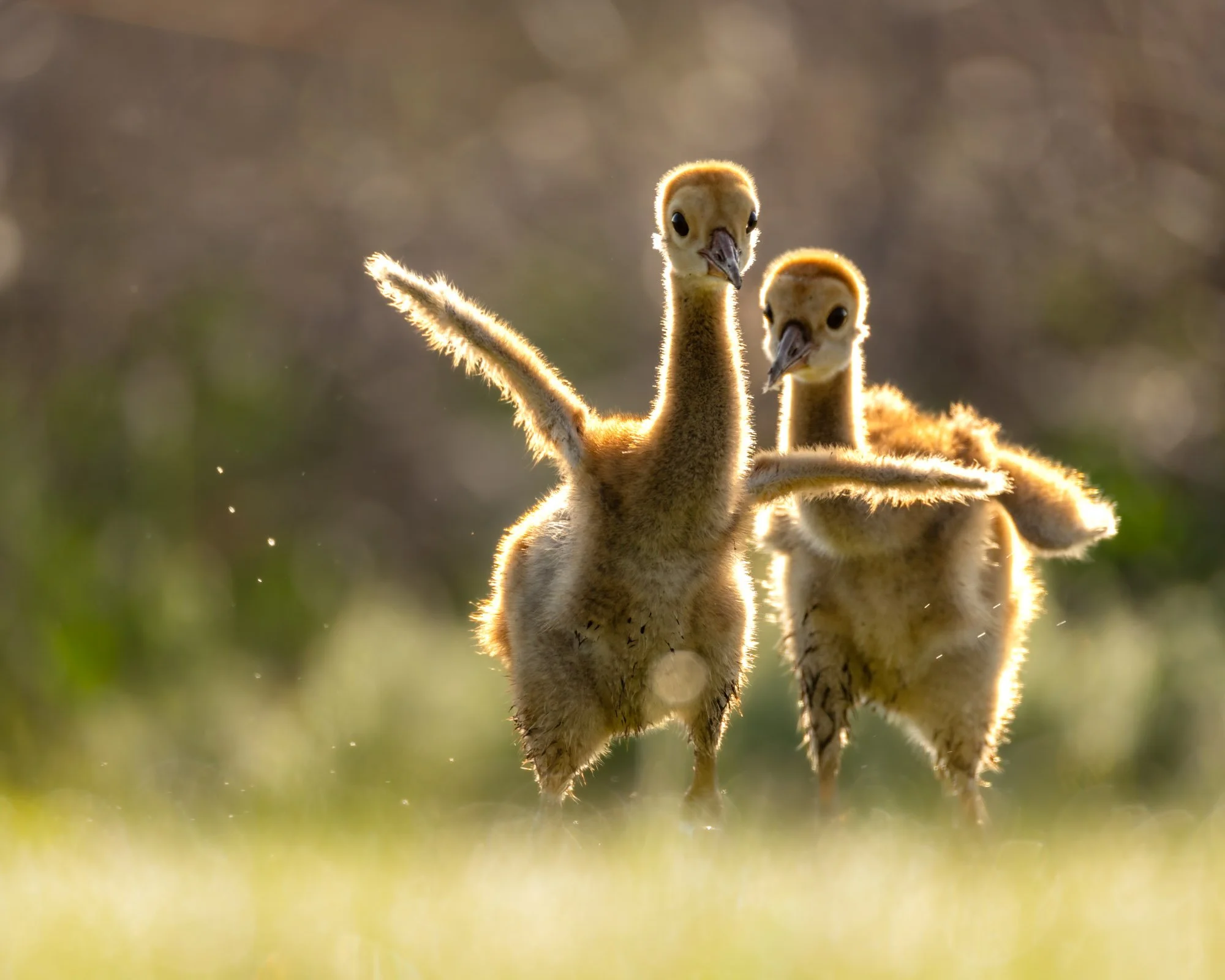
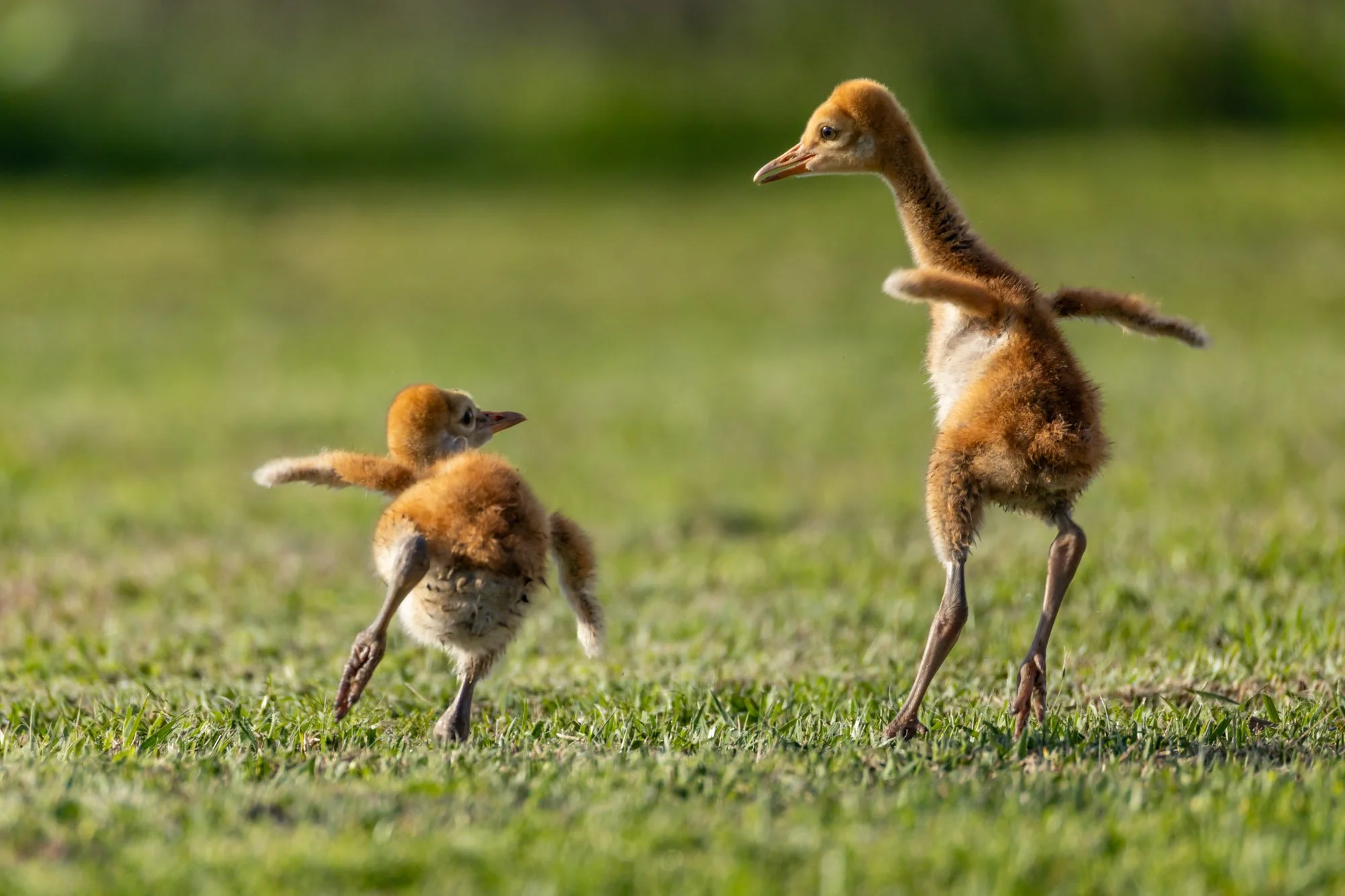
This season’s colts had distinct personalities right from the start. One baby was a bit of a bully, frequently chasing its sibling away to hoard the choice morsels brought by one of the parents. Managing a family in a drought is exhausting work; This year, I also observed the father crane taking frequent, long trips out of the preserve, leaving the mother alone to protect and feed both competitive colts for hours at a time.
Behind the Lens: Chasing the Dream Shot
Despite the harsh seasonal conditions, I was determined to take every opportunity to grow as a wildlife photographer—while ensuring my presence added absolutely zero additional stressors to the crane family. With that boundaries-first mindset, I set out to capture a specific checklist of creative goals that had completely eluded me the year before.
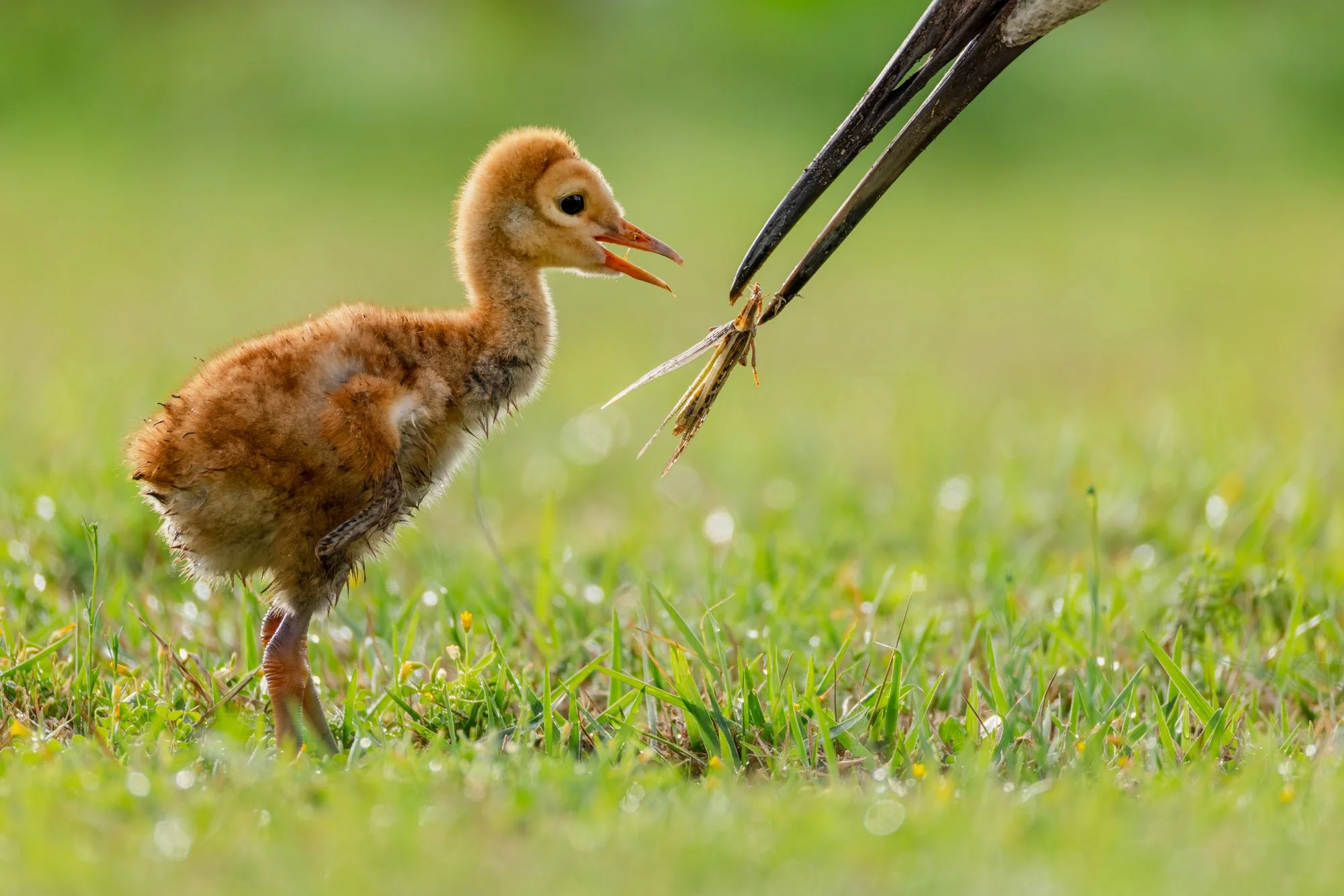
I was determined to capture three specific moments: a tiny colt at full speed with its wings extended, a baby wading through a vibrant patch of wildflowers, and an intimate feeding shot focused entirely on the colt as the parent’s beak dips into the frame.
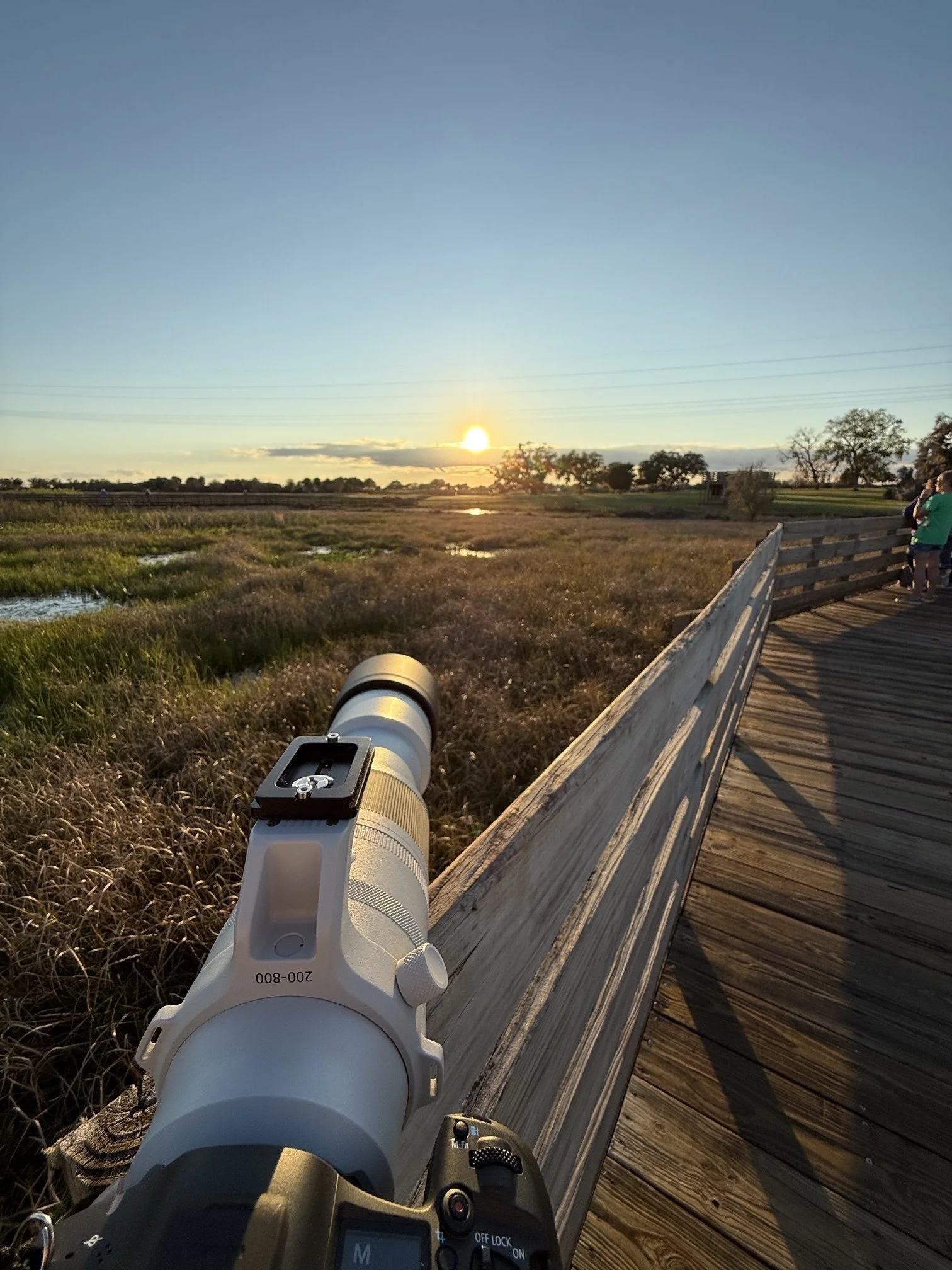
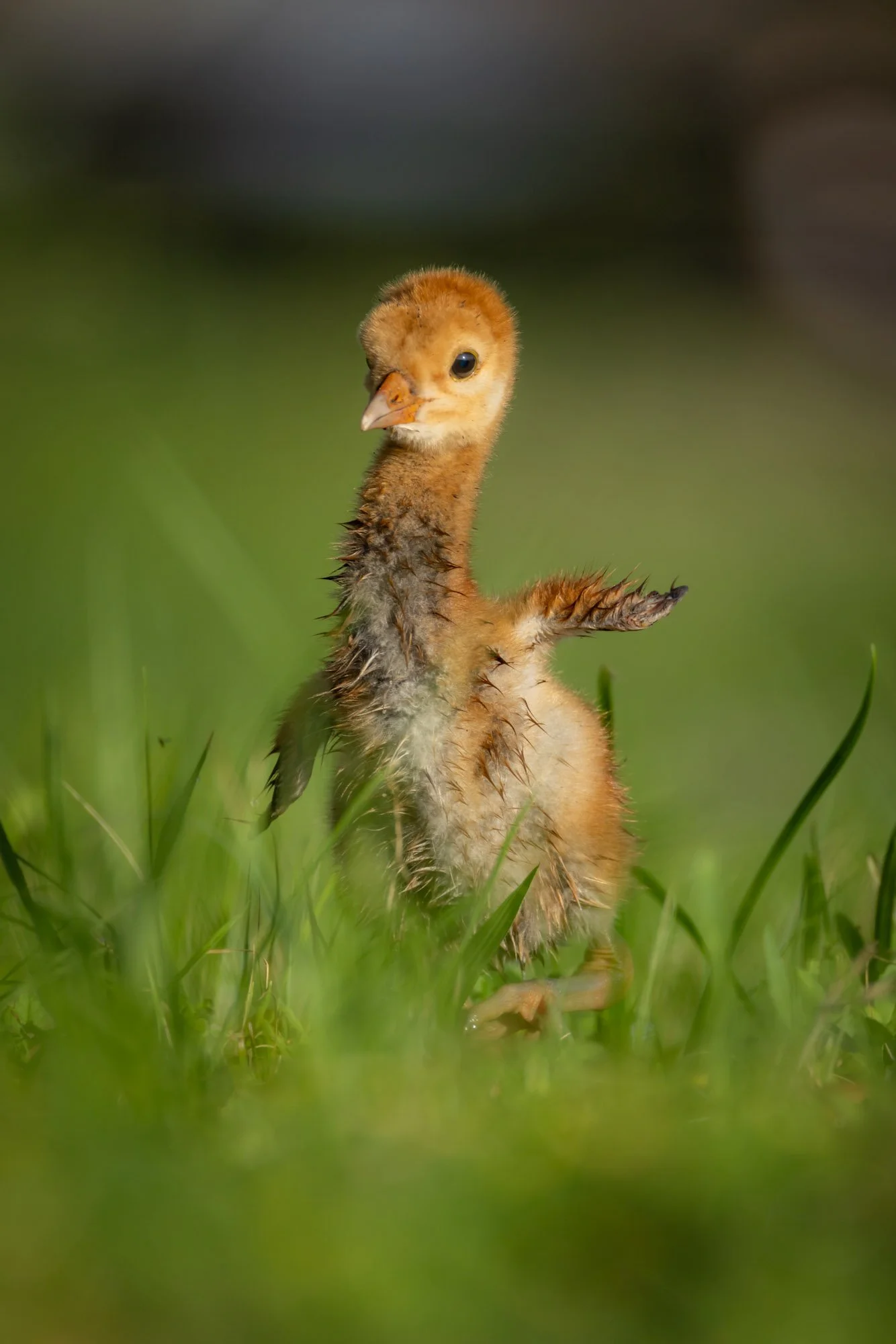
Getting down at a true eye-level perspective in the mud to react to these sudden, unpredictable moments was a welcomed challenge. I missed the shot more than a few times. However, by intentionally heading out into rainy, misty mornings, the patience paid off. Balancing a fast shutter speed to freeze the birds while managing digital noise in the dim early morning lighting was a technical tightrope, but it resulted in some of my absolute favorite images of the year.
The Reality of the Wetlands
The reality of documenting wild animals is that the story doesn't always end with a fairy tale finish. The same drought that packed the cranes into localized areas also concentrated the predators.
On top of navigating the seemly endless development risks—the daily hazard of leading tiny chicks across busy asphalt roads to reach foraging grounds—the cranes faced heightened natural pressures. Bobcats, alligators, river otters, and low-flying Northern Harriers were also patrolling the shrunken shorelines.
I photographed this fragile family multiple times a week for a month, watching the colts make the daily trek from their nest, through the remaining water to the preserve, and back, surviving their most vulnerable initial days. Tragically, the modern world and the wilderness are equally unforgiving. A few weeks after my last visit, word came from the community that both babies had been lost—one while outside the preserve boundaries, and the other overnight to a predator.
It was a heartbreaking conclusion to the season. Documenting these animals over multiple months means naturally rooting for their success—and carrying the weight of these losses is one of the hardest truths we face as wildlife photographers. But hiding that reality would do a disservice to these magnificent creatures. These ancient birds are fighting an uphill battle against a shifting climate, shrinking wetlands, and ever-encroaching pavement.
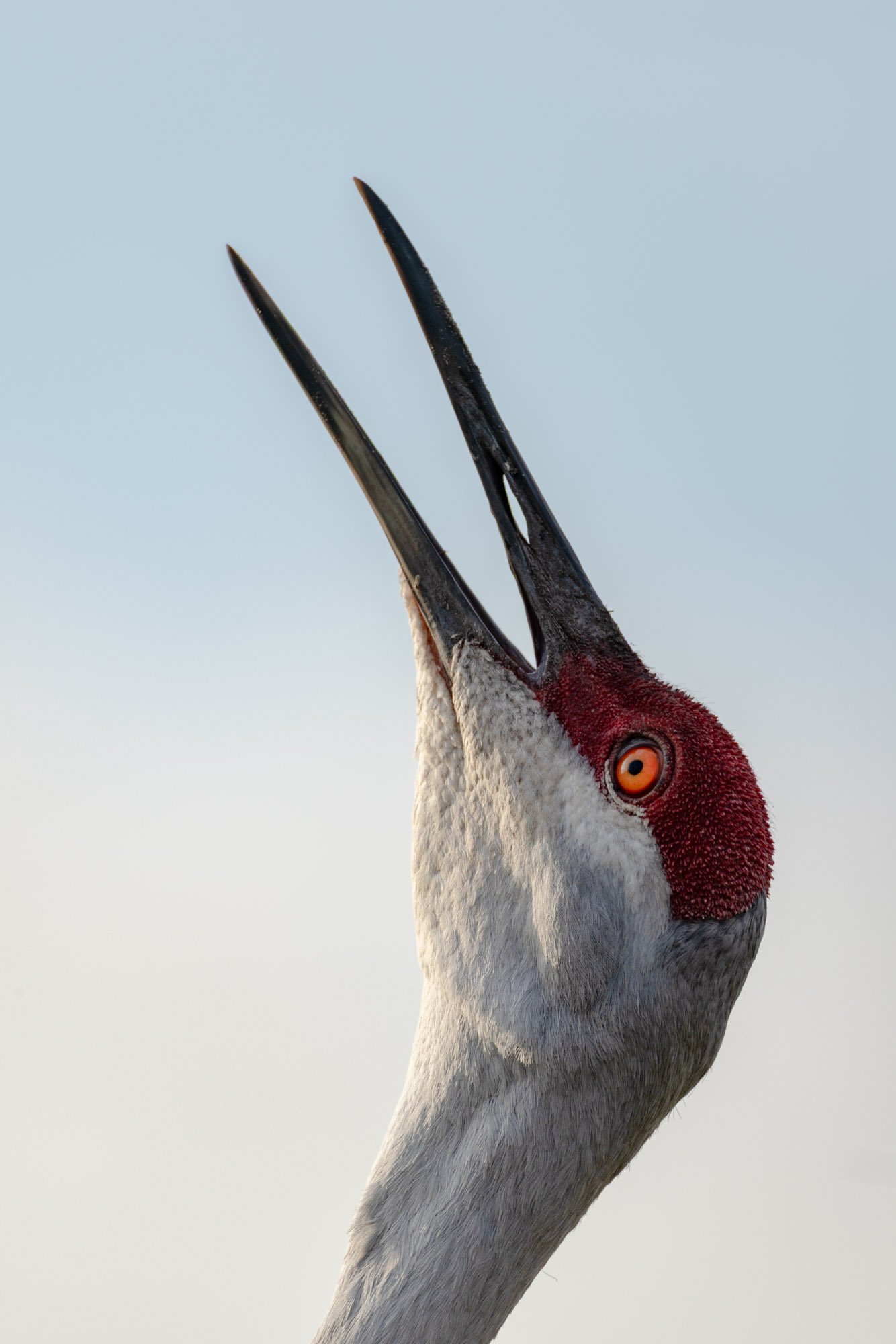
Yet, even in the wake of loss, the adult pairs return to the open fields. They stand tall, preen their feathers, and throw their heads back to bugle to other cranes in the distance. It is a defiant, beautiful promise that they are still here, adapting and persevering against the odds. And when the next season rolls around, I will be right back out there in the grass, documenting their journey again.
Explore the Gallery & Join the Journey
Want to see the full collection of moments from these past two seasons? Head over to my Ancient Echo Galler Folder to view the complete collection of Sandhill Crane portraits, action shots, and landscapes.
To get behind-the-scenes field updates, wildlife photography tips, and early-bird notifications for my upcoming fine-art print shop launch, be sure to drop your email below to join our community newsletter.