
The Osprey Chronicles: 8 Weeks at the Nest
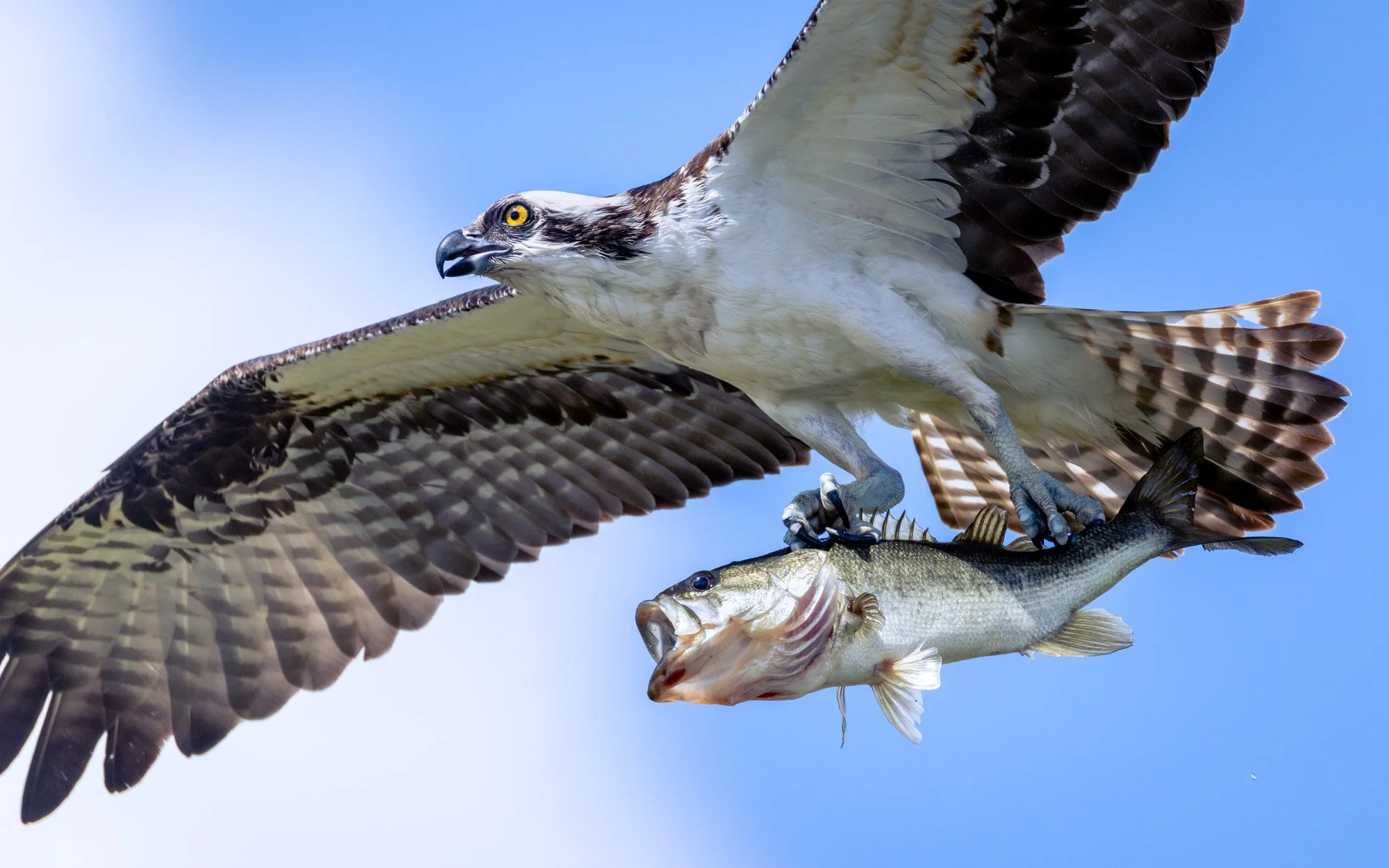
Ospreys are nature’s ultimate anglers. Diving like a missile into lakes and oceans, they slice through the water and emerge carrying a fisherman’s bounty. They are such masterful hunters that they can be found thriving on every single continent except Antarctica. While they are international travelers, here in Florida, these magnificent raptors consistently show off their hunting skills right alongside human anglers and frequently fend off bald eagles looking to steal an easy meal.
But beyond all of that, ospreys are dedicated parents, incredibly talkative partners, and possess unique, quirky personalities. Their unmistakable whistling calls, piercing eyes, and deep, contrasting colors make them absolute favorites of mine. Having not captured any osprey nesting photos last year, I set a definitive goal for myself this season: document a local Florida osprey nesting cycle from start to finish, capturing a chronological series of fledgling’s growth.
Scouting and the Unpredictability of Nature
If you’re driving through Central Florida in the spring, you can often see a noticeable influx of ospreys as they return to their seasonal nesting grounds. Many times, they’ll borrow billboards, parking lot light posts, or the man-made nesting platforms provided throughout common nesting areas. However, finding a nest that is both aesthetically pleasing and offers a clean, accessible viewpoint for wildlife photography is the ultimate challenge.
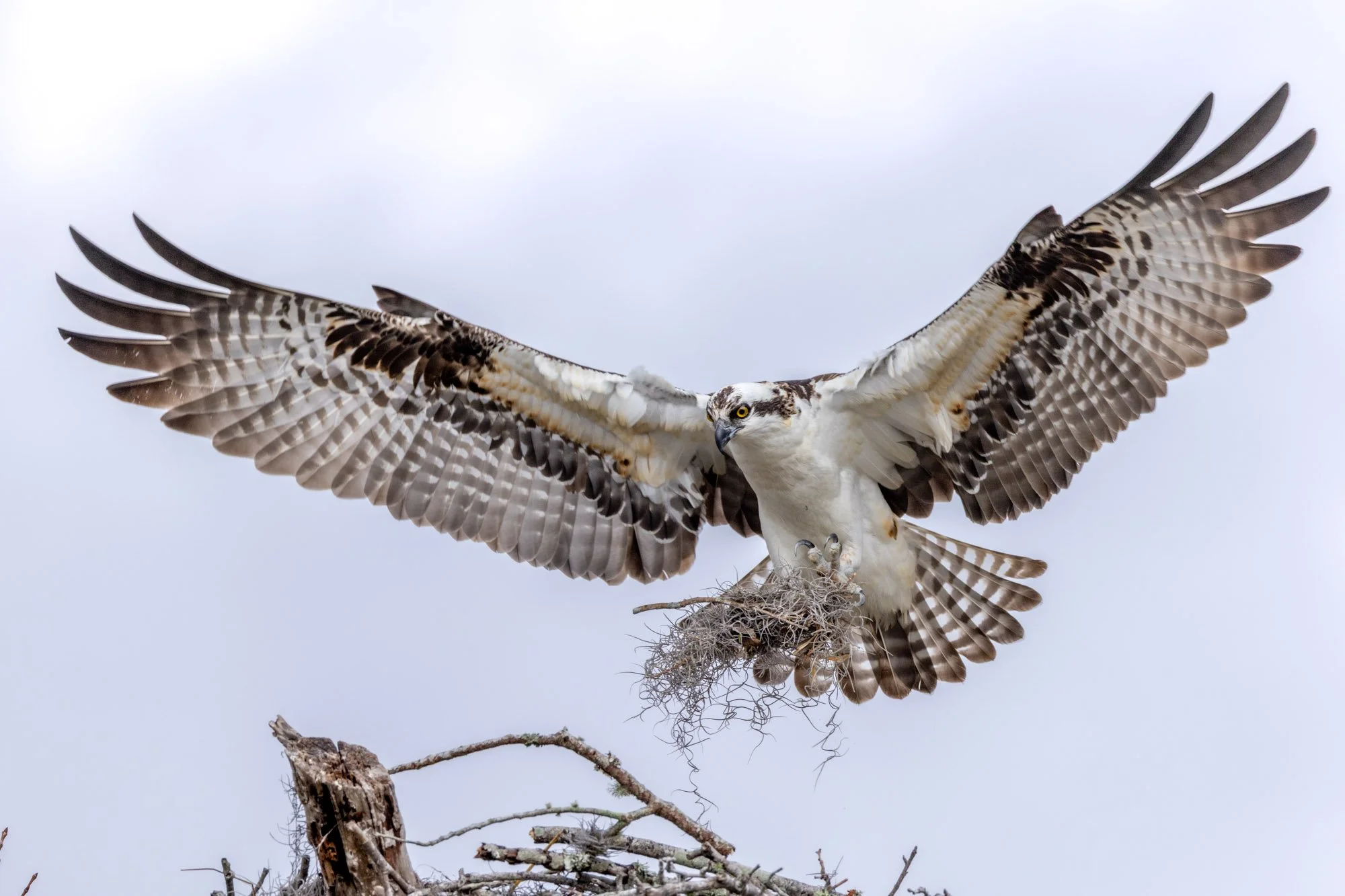
After scouting a few of my favorite local spots, I found what quickly became my favorite pair building a nest in a dead tree close to my home. Within days, their scraggly bundle of twigs transformed into a robust castle. I spent hours standing and watching, tracking the parents as they rotated incubation duties to fish and capturing some of my absolute favorite osprey-in-flight photographs.
Unfortunately, wildlife photography comes with a front-row seat to the harsh realities of nature. Something similar to what I shared in my last blog about the Sandhill Cranes also took place here with the ospreys. Around days 35 to 40 of what would have been incubation, I arrived to find the nest empty with both parents quietly preening on a nearby tree. The nesting attempt had failed.
While it was heartbreaking to witness from my perspective, nature quickly adapted, and the adults immediately began refurbishing the nest with new sticks and moss to possibly have a second attempt later in the season. With the Florida heat rapidly rising, however, I knew I had to pivot my project to a completely different nest an hour and a half away.
From "Angry Chicken" to Sea Eagle: The 8-Week Journey
My timing at the second nest could not have been more perfect. On my very first visit, a brand-new osprey hatchling made its wobbly debut.
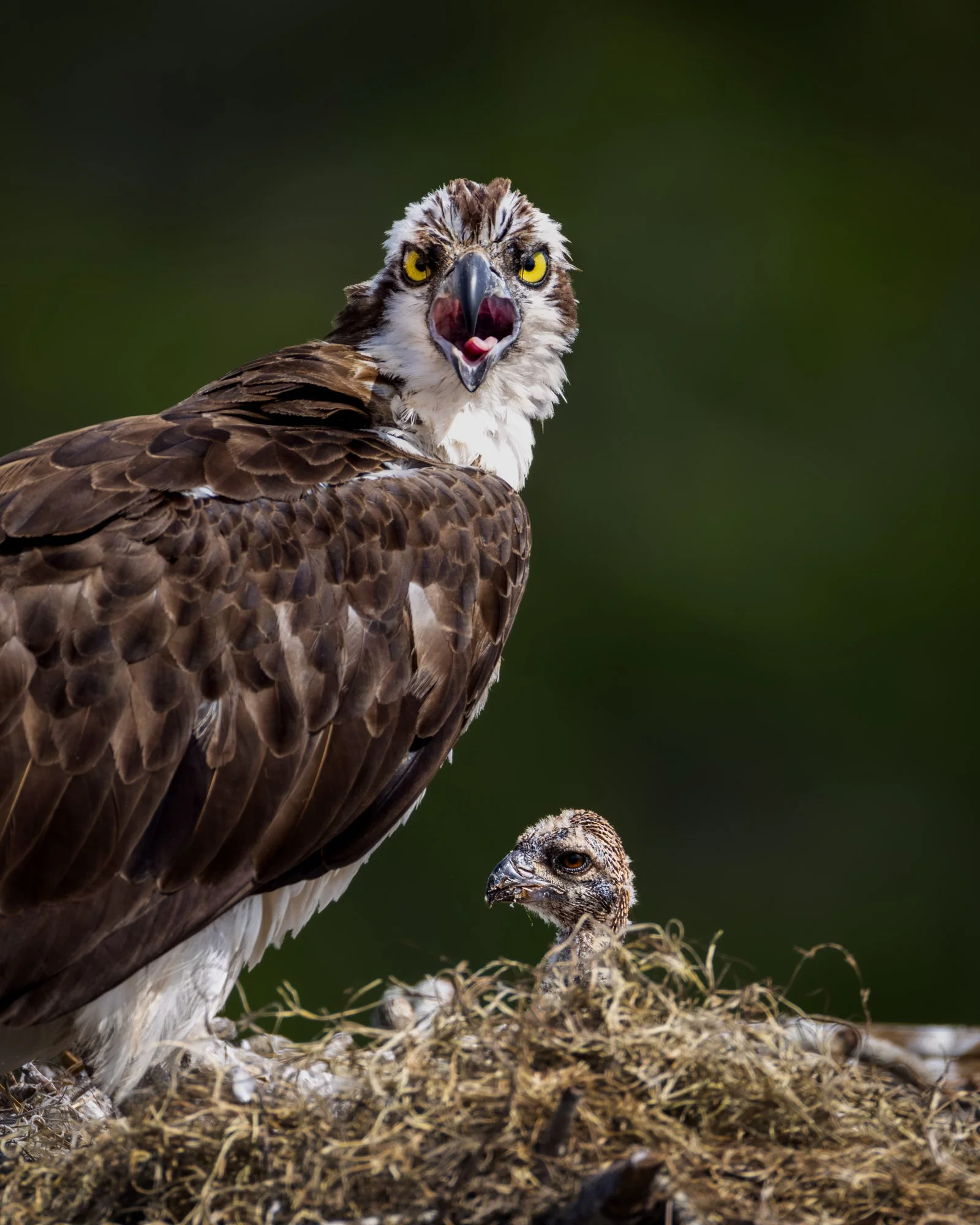
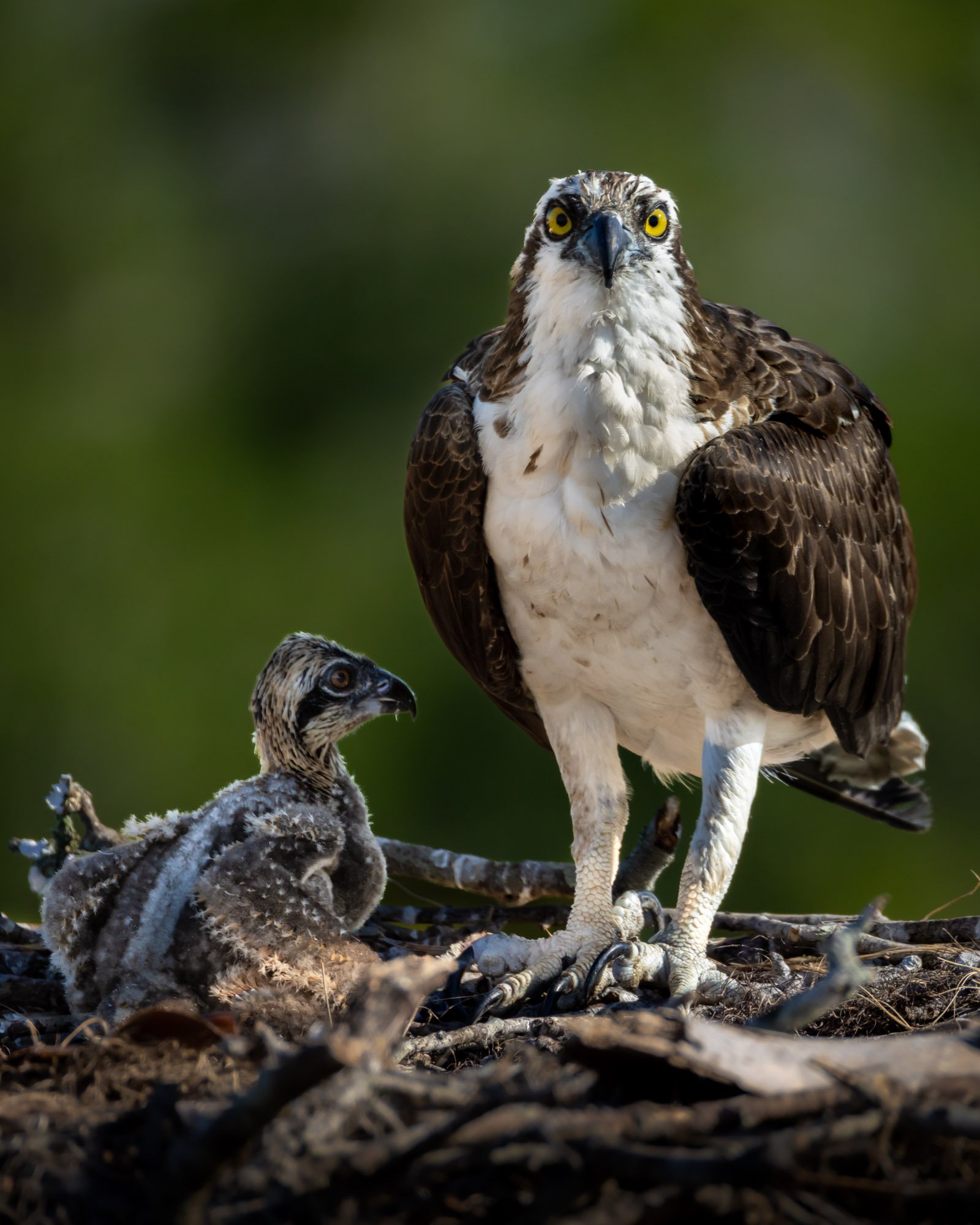
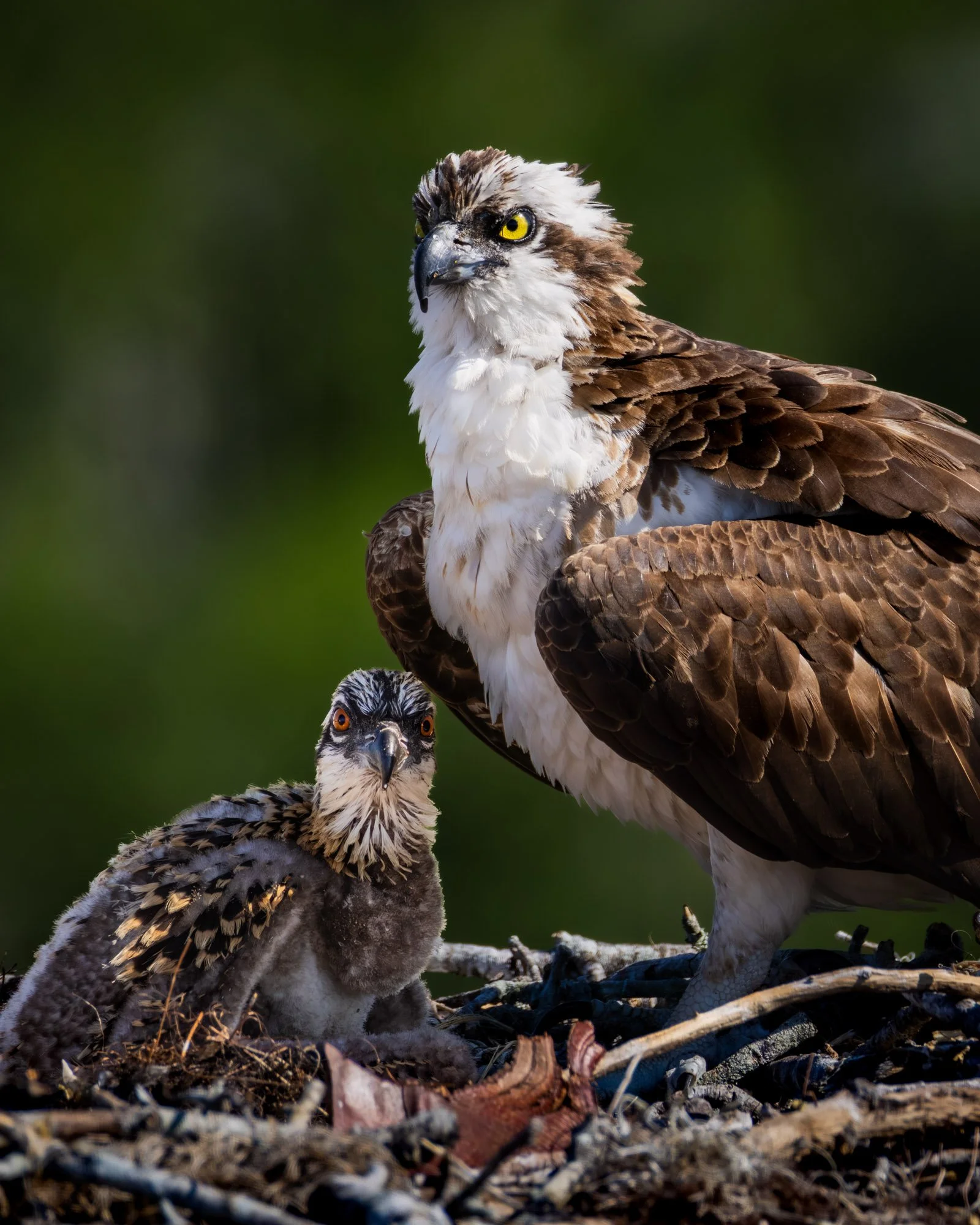
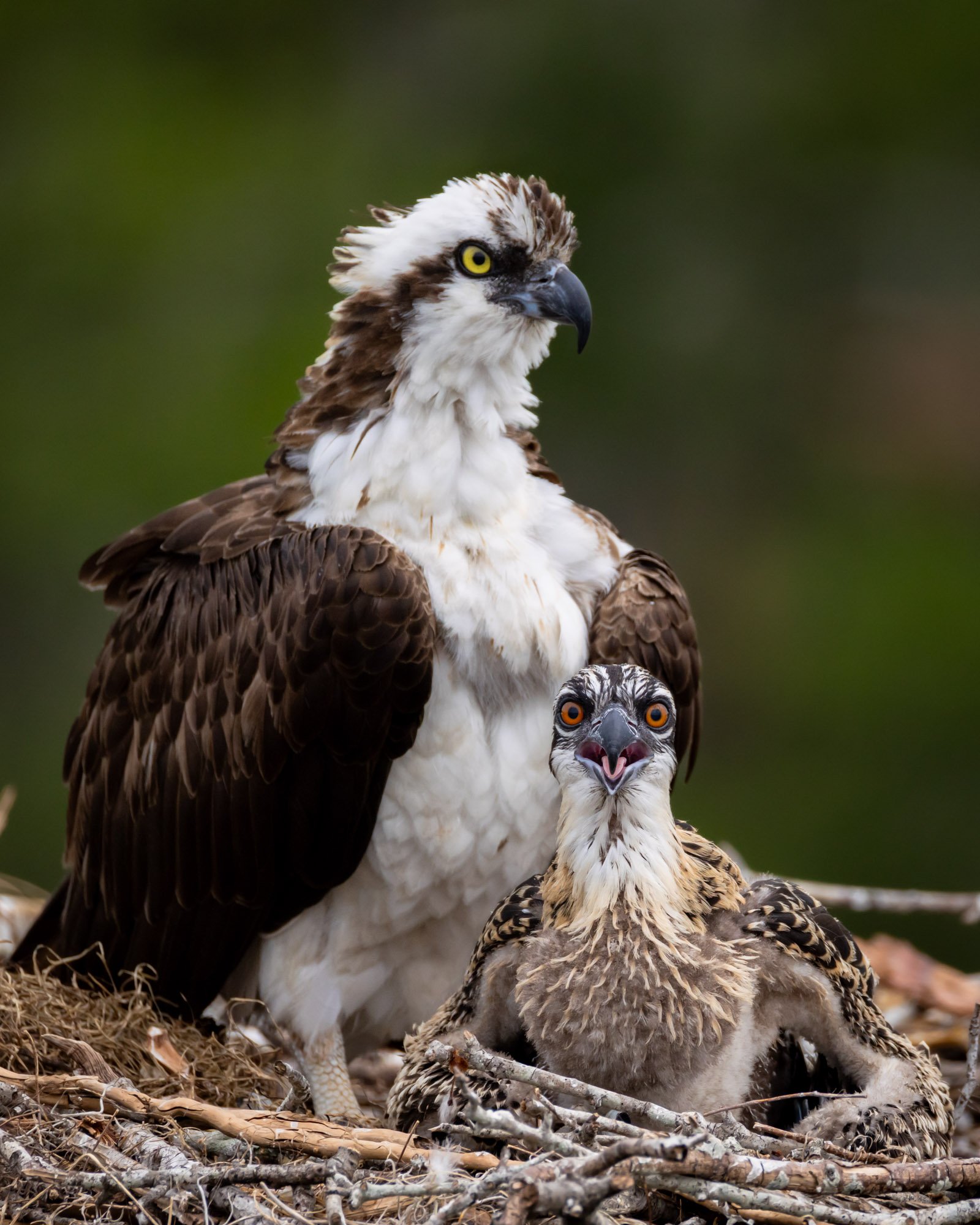
Popping its head up for only a few seconds at a time before tucking back under its mother's protective wing, the tiny hatchling looked more like an angry plucked chicken than a master predator that would one day earn the nickname "Sea Eagle." With only a single chick in the nest, my photography goal evolved: I would attempt to compose and capture a weekly portrait of this singleton chick alongside its mother to chart its growth, as well as the connection between mother and chick over the next eight weeks until it was ready to leave the nest.
Perched roughly five stories high, the nest was completely exposed to the brutal, unrelenting Florida sun. During the initial weeks, the chick slowly found its footing and began developing its first real feathers. To shield her baby, the mother would spread her wings to provide a canopy of shade and patiently feeding the chick small morsels every time the father flew in with a fresh catch.
Week four was when everything exploded. The chick underwent a massive growth spurt, and its feathers were filling out beautifully. Even as an only child with no siblings to compete against, its wild instincts kicked. The moment the father landed with a fish, the baby went on full defense, raising its tiny wings and aggressively shielding its food. In the chaos of the moment, it didn't realize it was fighting its own shadow and would twirl around to bite its own wings. The chick’s true quirky personality was starting to shine through.
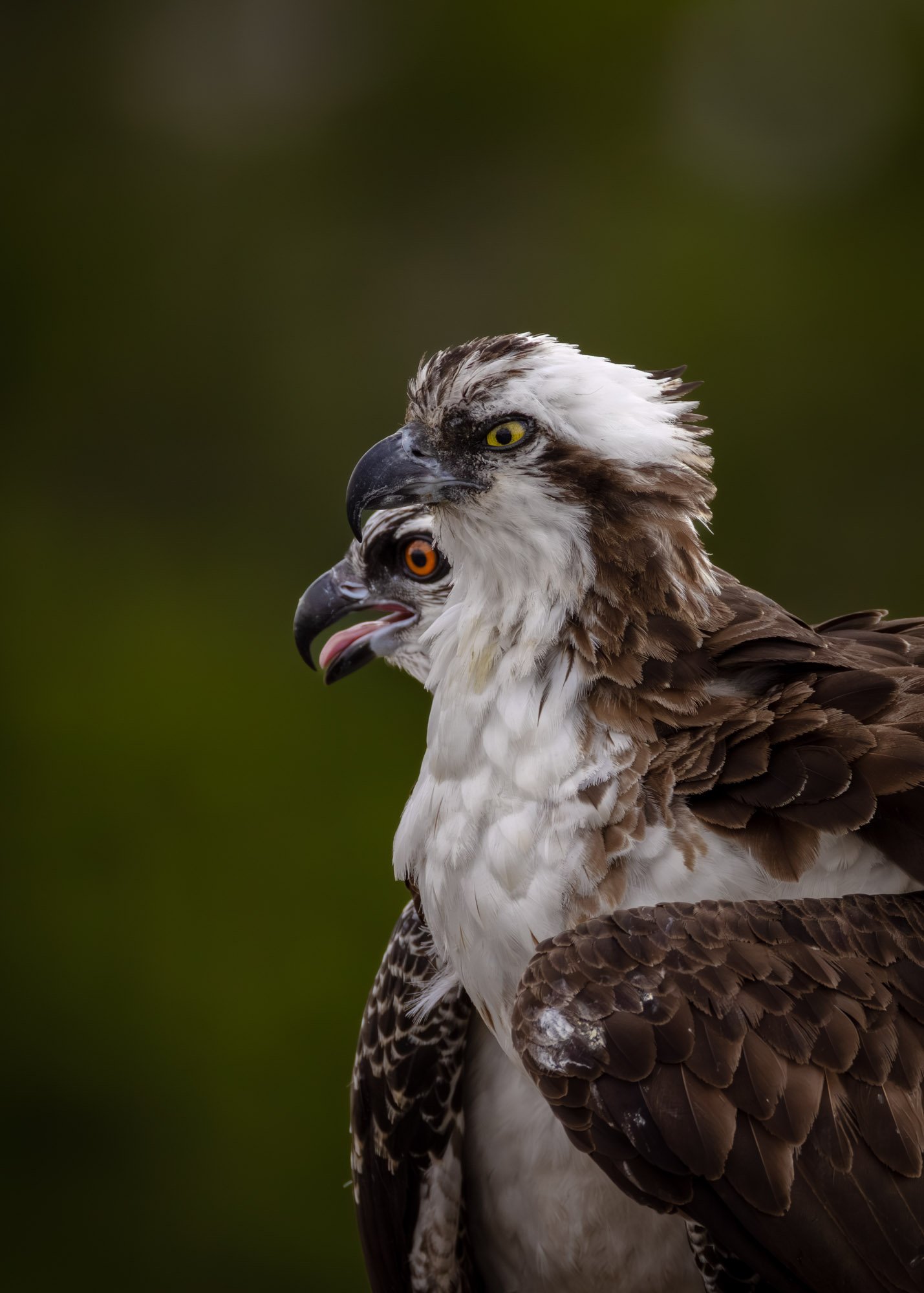
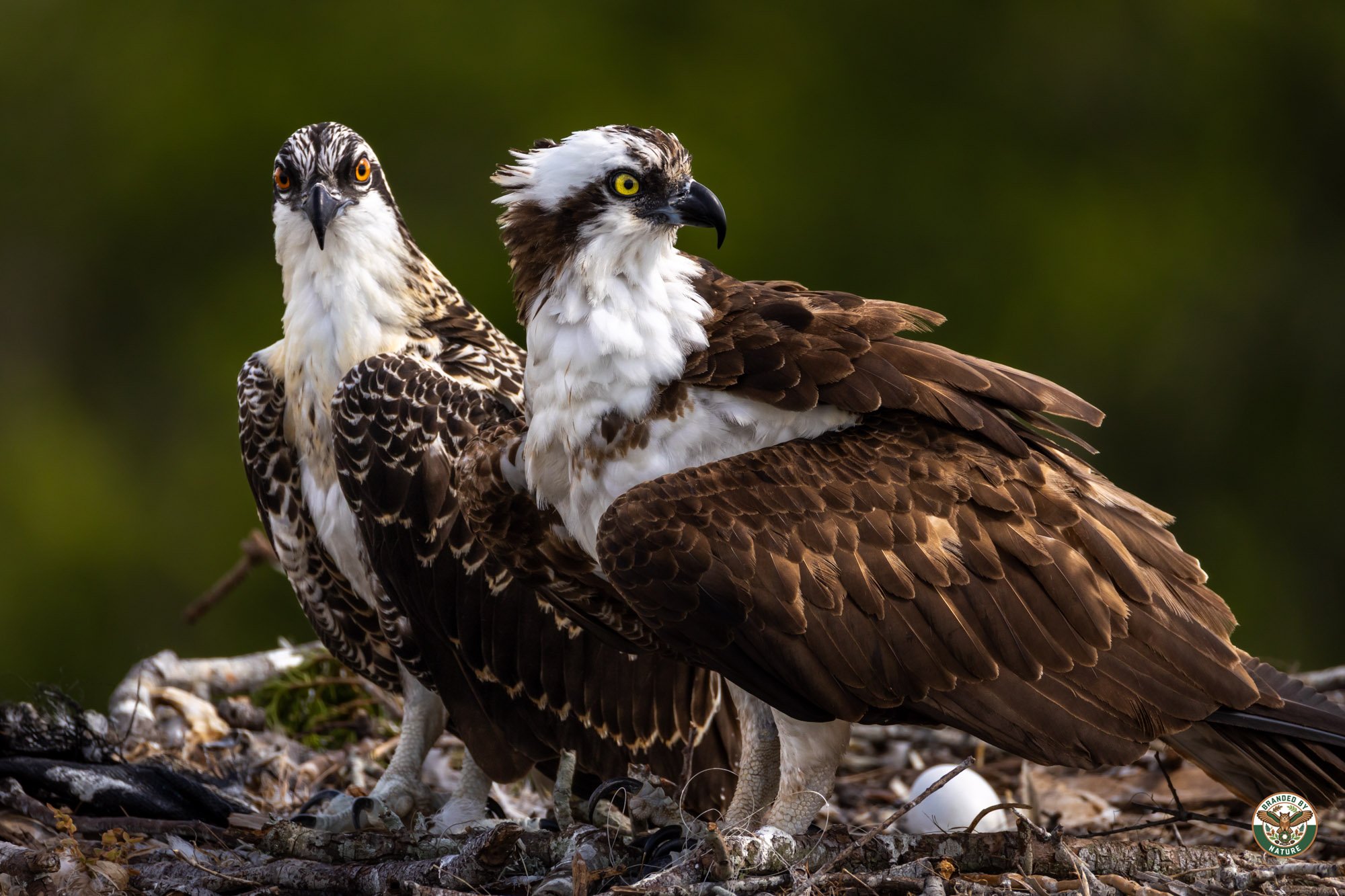
Over the next month, that comical, wobbly hatchling steadily transformed into a formidable fledgling. Weeks 5 through 7 became a blur of rapid development as the chick spent its days stretching its wings, building vital muscle memory, and mimicking its parents' regal posture. By Week 8, the transformation was nearly complete. Standing tall at the edge of the nest, its wings were fully feathered and catching the wind. It was completely unrecognizable from the tiny hatchling I met two months prior. While it still had the notable orange eyes of an immature osprey compared to its parents' yellow eyes, and the white-rimmed feathers unique to a juvenile, it was ready for its next chapter beyond the nest.
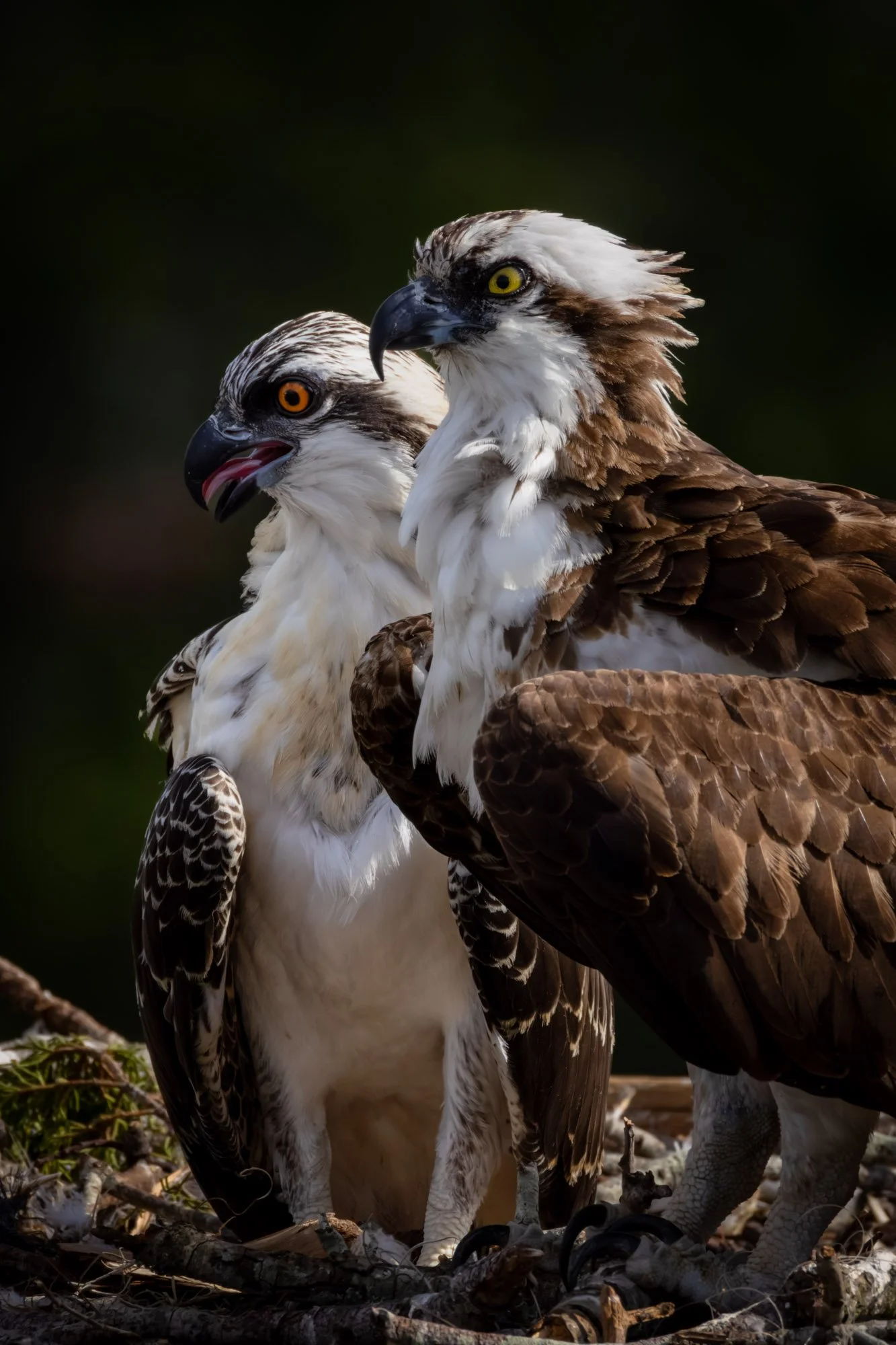
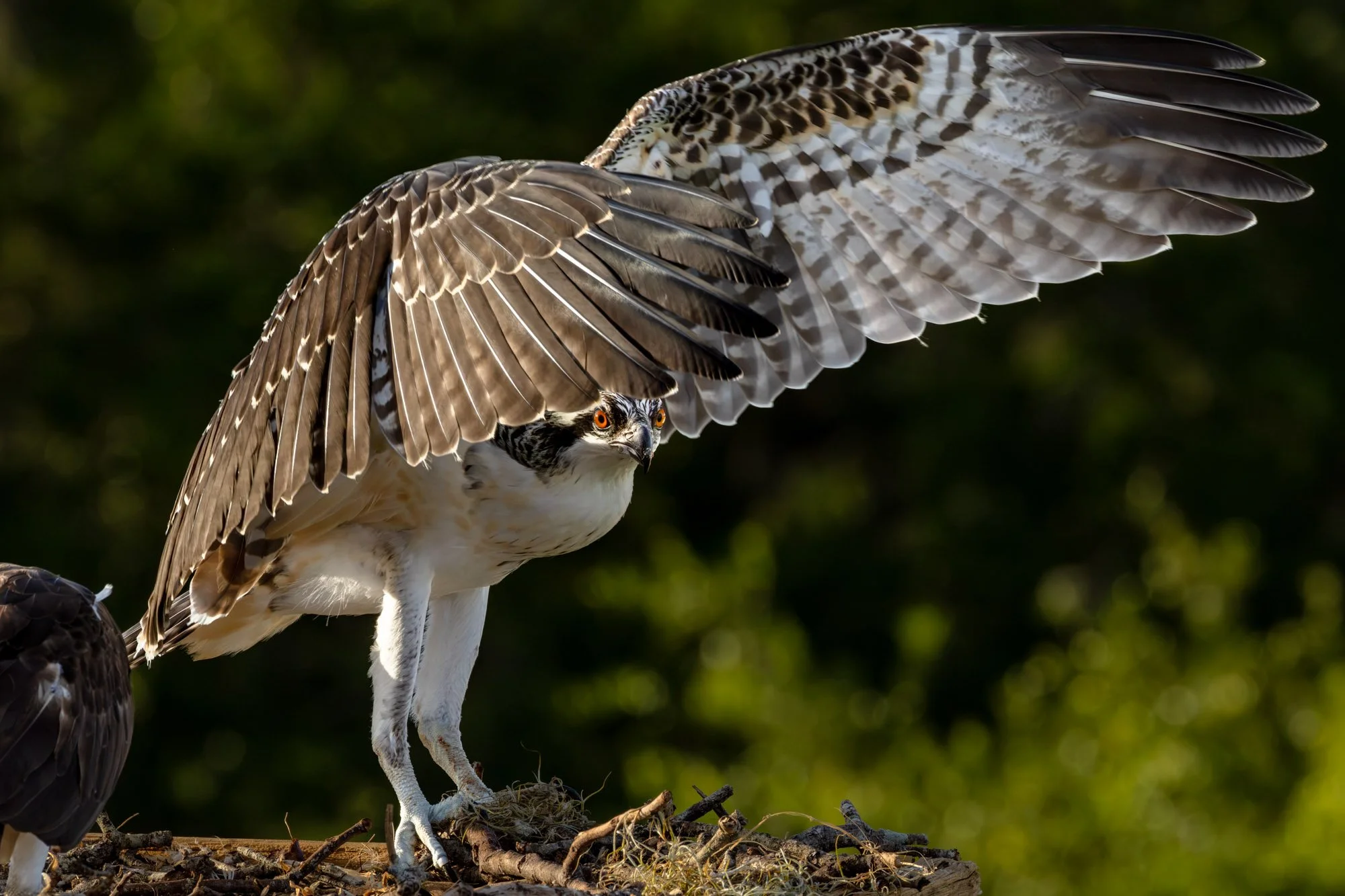
My Favorite Moments on the Nest
While I was visiting the nest with a specific photography goal in mind, wildlife photography is still 5% clicking the shutter and 95% quiet appreciation and observation. Sitting back and watching this family dynamic unfold gave me some of the most rewarding moments of the season.
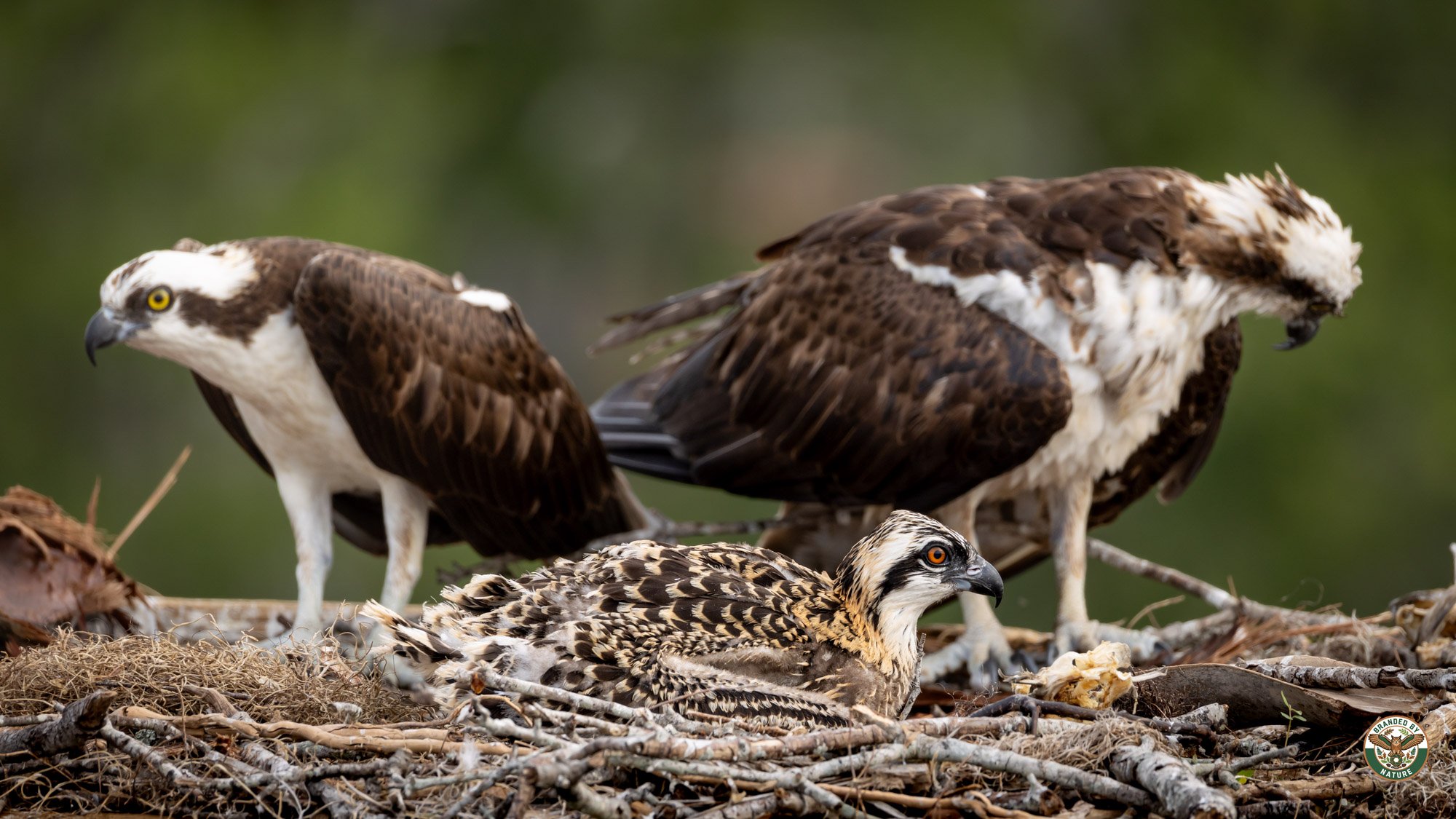
During Week 4, I captured a couple of my favorite frames of the entire project. The first was when the male osprey flew in to pass a fresh catch over to the mother. As she prepared to dig into the meal, the father remained at the edge of the nest, seemingly taking inventory of the household as I framed my shot.
In this composition, both parents are slightly out of focus but naturally drawing your eye. As your vision adjusts, you notice where the focus truly lies: right on the hidden chick. At four weeks old, its downy coat and feathers blended so seamlessly with the textured grays and browns of the twigs that if it lay perfectly flat, it would become nearly invisible.
I also observed an endearing pattern of communication between the parents during these long hours. While the father didn’t stay directly on the nest long after delivering a fish, he wouldn't just vanish. He would fly over to a nearby branch and stand watch, acting as a lookout while the mother was tied down with the slow, patient task of feeding the chick. The mother would occasionally call out to him in a quiet, subtle manner as the meal progressed. Once the feeding was done, her tone shifted and she suddenly had a lot more to say! Only after that final vocal exchange would the father take off, flying back toward their favorite fishing grounds.
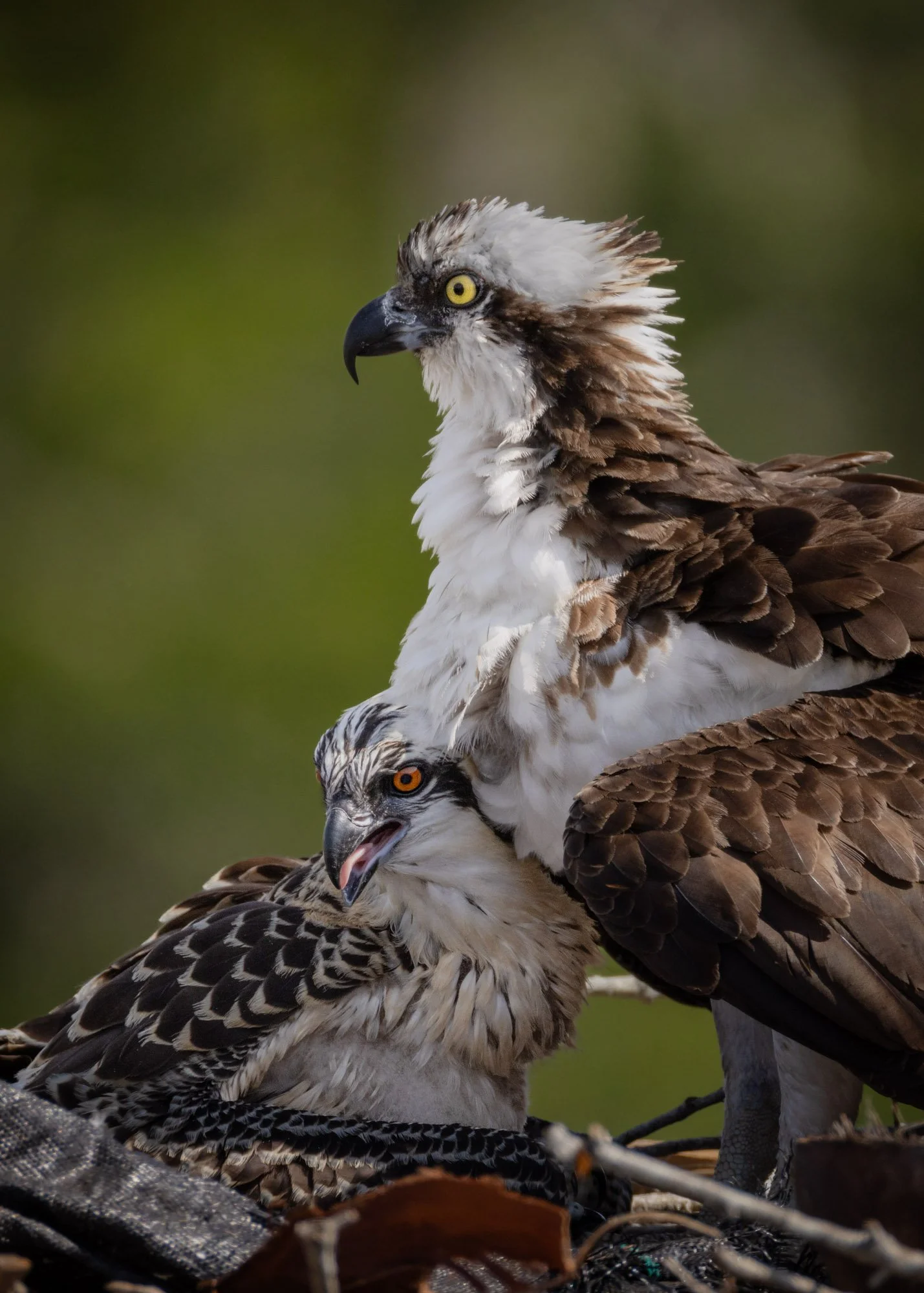
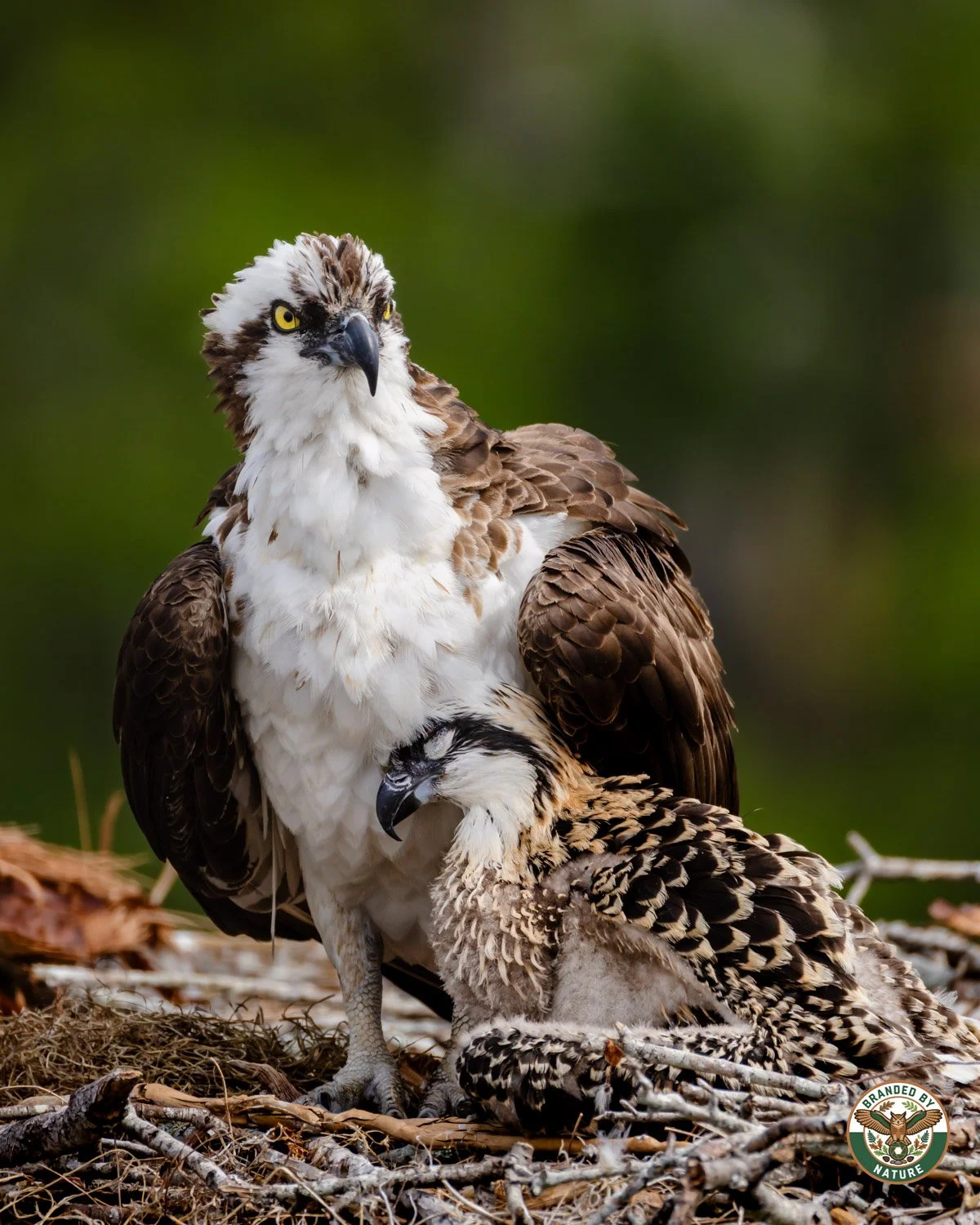
Once that moment passed and the meal was over, the chick tried to shove its body back under its mother's chest for comfort and shade, just as it had done weeks prior. But now, it didn't remotely fit, resulting in an incredibly endearing portrait of the chick cozied tightly against its mother's chest.
A Bonus Glimpse into the Unusual
In Week 7, I observed something else that was completely unexpected sitting right in the middle of the nest: a brand new, perfectly intact egg. I had been able to get a pretty clear view of the nest during my previous visits, and I can say confidently that it hadn't been there before.
While it's supposedly rare, I’ve read that female raptors can occasionally experience a late-season hormonal surge and lay a surprise, unfertilized egg even while actively raising a chick. Seeing that fresh egg sitting right alongside a six-week-old fledgling was a striking, bizarre reminder of just how unpredictable life at the nest can be.
Behind the Lens: Walking the Exposure Tightrope
Beyond their incredible skill and unique personalities, I love the technical challenges that come with photographing ospreys. Not only do you have to be in the right spot at the right time through plenty of preparation, planning, and an immense amount of waiting, but you’re also walking a literal exposure tightrope.
With their contrasting deep brown and glaring bright white feathers, and often shooting them from below, your settings have to be spot-on to capture the rich details in the dark plumage without completely blowing out the whites.
Whenever possible, I prefer tracking ospreys on overcast days to help filter some of the bright light. When capturing action shots overhead, I take my camera body out of full manual mode and utilize Auto ISO so I can fully control the exposure compensation with setting of +2/3 EV or so to push light into the shadows under their wings.
However, because the successful nest required a three-hour roundtrip commute on my weekends off from work, I couldn't afford to sit around and wait for the "perfect" overcast sky. I had to shoot in the direct, harsh morning sun. To counteract the intense glare on their white crowns, I had to take my exposure compensation the exact opposite direction, dialing it down to -1 EV to keep the whites intact.
An Unforgettable Season with the Ospreys
Looking back, this has easily been one of my favorite and most rewarding photography years to date and we’re only halfway done. Capturing this family's story was an unforgettable experience and the hard work in the Florida sun truly paid off. Aside from the incredible memories, I am honored to share that one of my favorite frames from this season, “Iron Talons, Silver Prize”, was selected as a winner in APA LA's Off the Clock competition!
By the time Week 8 rolled around and the fledgling was ready to test its wings, it was time for my own next chapter. The conclusion of this project lined up perfectly with my departure for my first trip to Yellowstone National Park, where a whole new wildlife adventure was waiting. (You can read all about that journey in myYellowstone Blog Post!)
Explore the Gallery & Join the Journey
Want to view the full collection of my absolute favorite osprey moments? Head over to my Osprey Portfolio Folder: Talons on the Water to explore the series or visit my shop page to bring the regal spirit of these birds into your own home through a couple of my favorite photos, including the award-winning image.
To get exclusive, behind-the-scenes field updates and early-bird notifications for upcoming print launches, enter your email below to join our community newsletter.