
Yellowstone's Hidden Waterbirds: The Stars of LeHardy Rapids
The first thing you probably think of when someone mentions a wildlife photography trip to Yellowstone is grizzly bears and gray wolves. Honestly, who could blame you? When making my first trip, my goal was similar: coming from Florida, where a huge portion of my portfolio is dedicated to birds, I was eager to expand into large mammals. At the top of my wish list was a red fox, with hopeful dreams of spotting a wolf or grizzly.
But I will never pass up a compelling bird encounter, and Yellowstone hosts two of North America’s most fascinating, highly specialized waterbirds in a truly extreme setting.
On a drizzly, overcast day when mammal sightings were slim, my photo tour group stopped at LeHardy Rapids. It was there that I had the chance to focus on the rushing white water and meet the first of these two amazing little species.
The Harlequin Duck: Whitewater Specialists
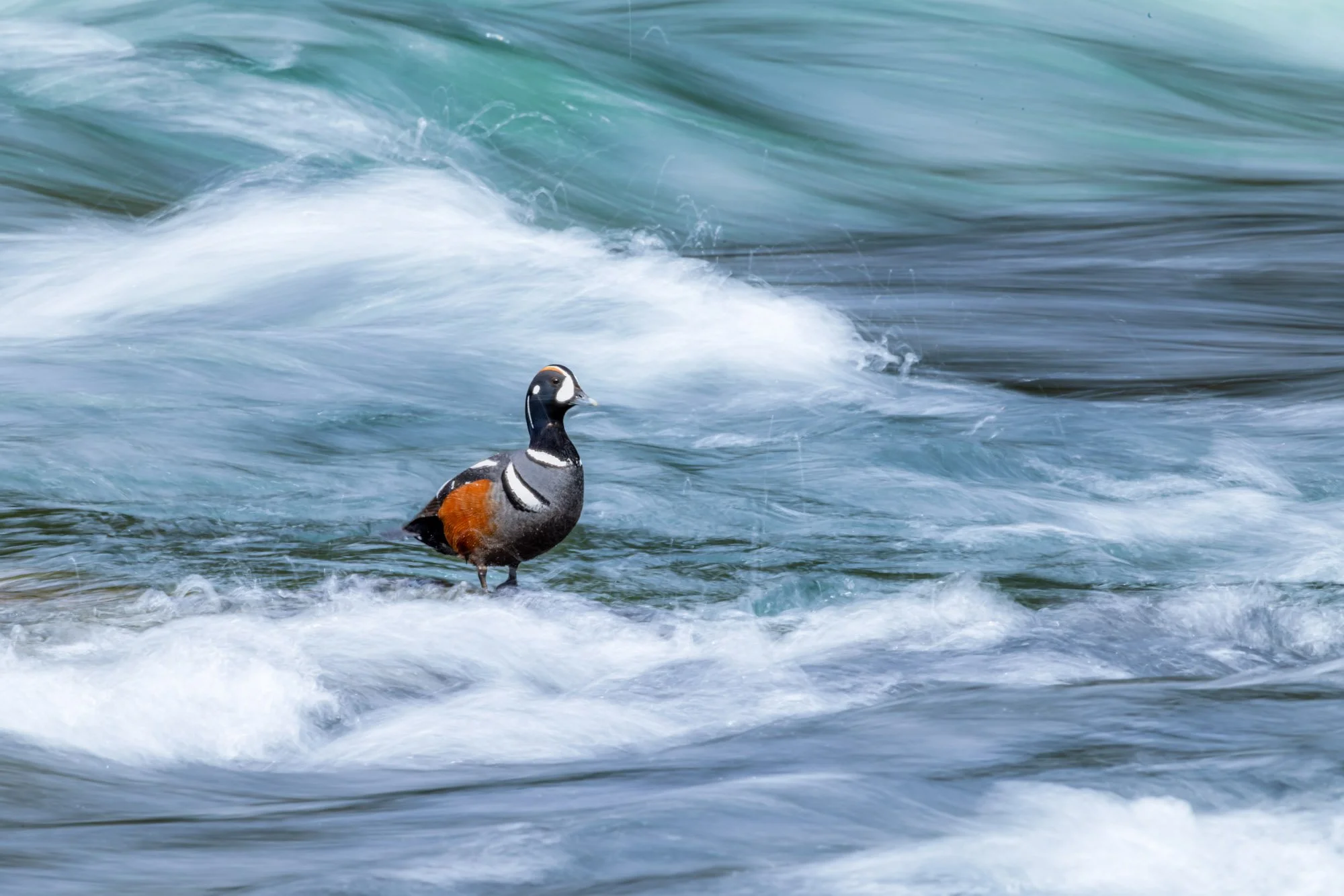
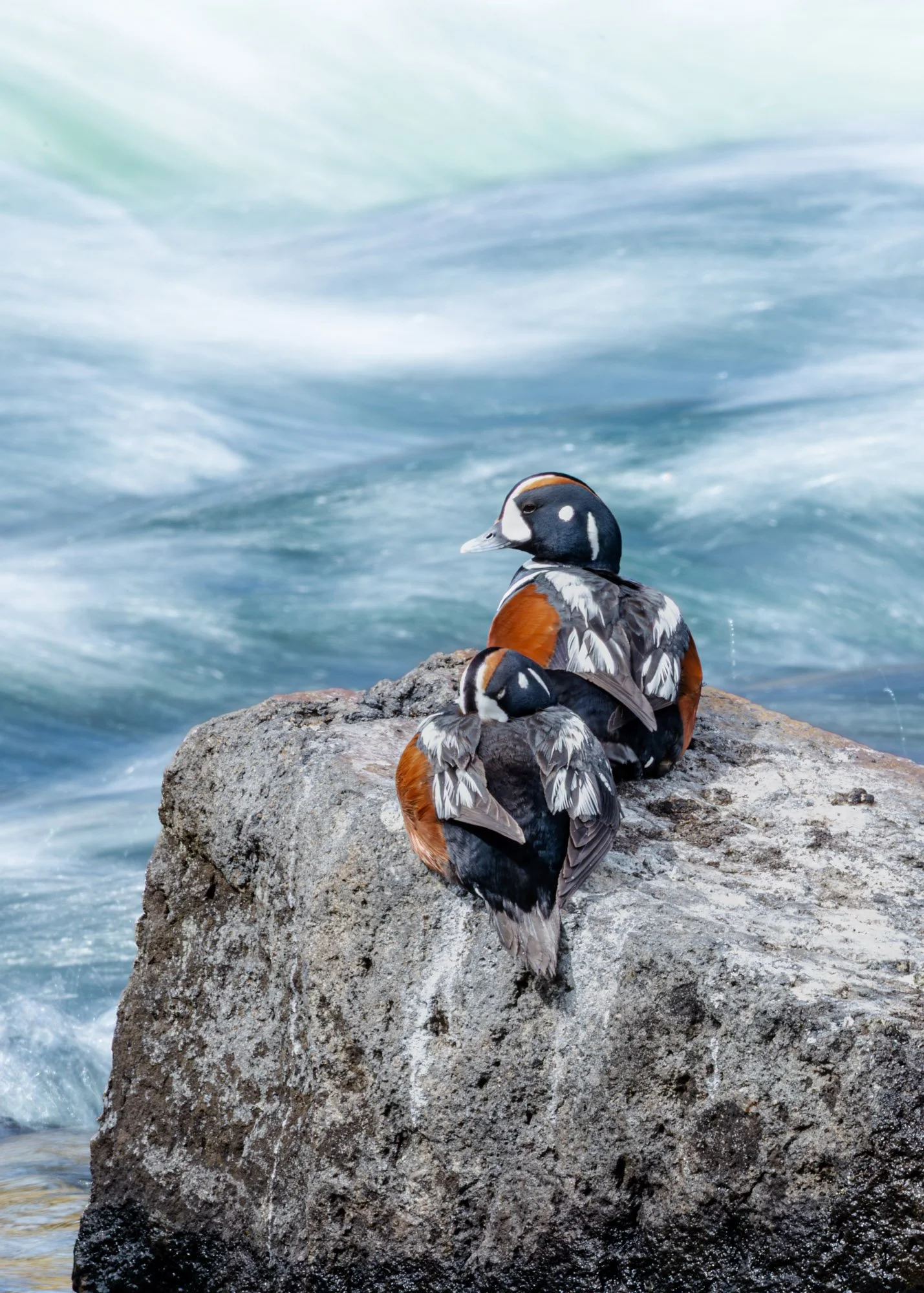
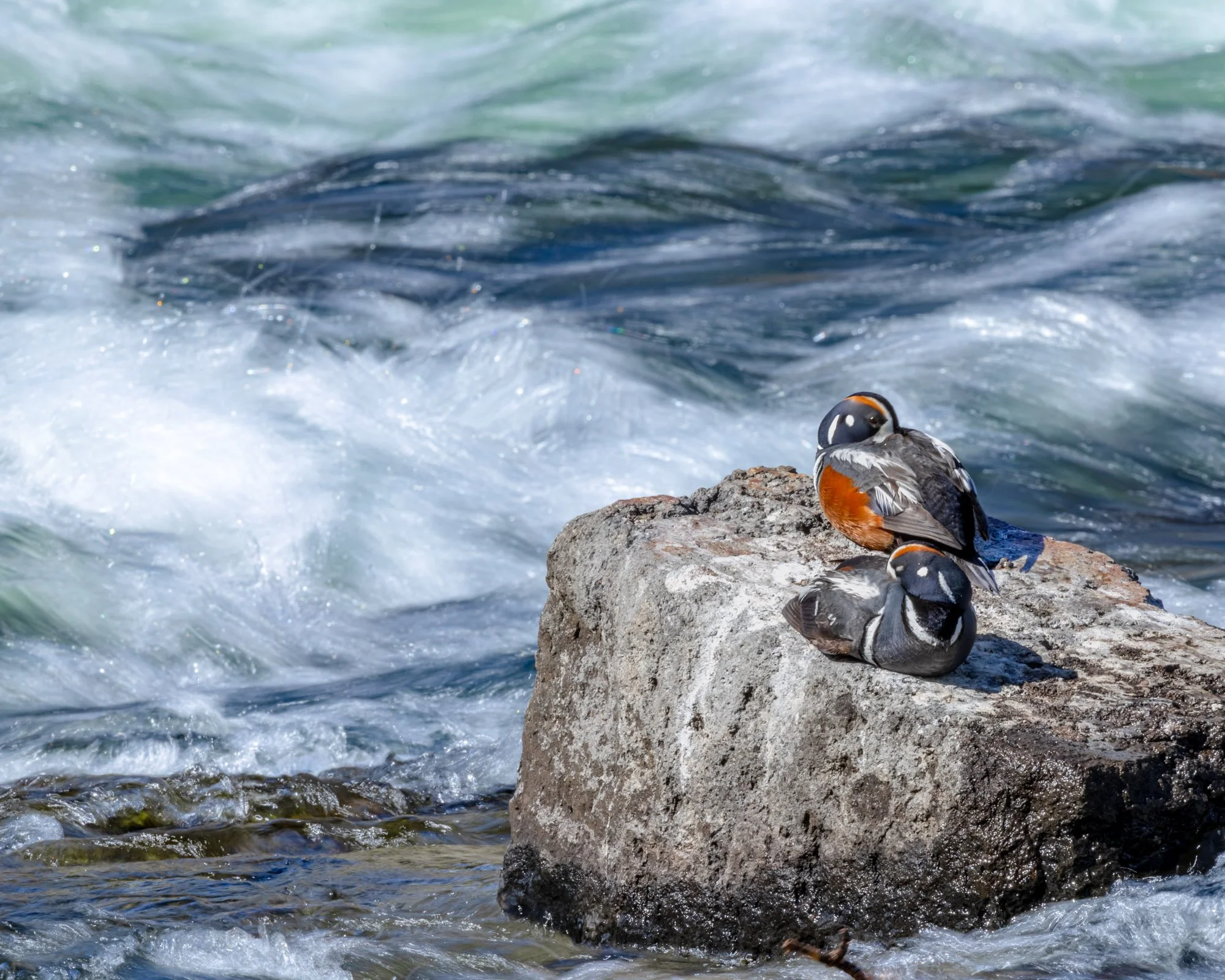
Harlequin ducks are strikingly patterned, sea-dwelling ducks that spend most of their lives in the coastal waters of the Pacific. Every spring, between late April and May, they make the journey inland to breed along fast-moving mountain streams. LeHardy Rapids is one of the few reliable places in the park to spot them resting and feeding on aquatic insects amidst the violent currents. Seeing these ducks masterfully plunge into bone-chilling, churning white water that would crush most others is incredible.
I wanted to experiment with slower shutter speeds to create a smooth, motion-blurred effect across the rapids while keeping the ducks sharp. But nature photography always comes with lessons. When I first set up, I quickly threw my 1.4x teleconverter onto the 600mm lens and tested a few different viewpoints before getting the tripod into position. I then tested some different shutter speeds while the ducks rested quietly atop the rocks.
Once I felt I got the shots I was looking for, I unclipped the camera from the tripod and zoomed in on the back of the screen to double-check the sharpness of the ducks. That was when I noticed it… amidst the rush to throw the teleconverter on, grab the tripod, and set off down to the river, I had smudged the glass on the teleconverter, leaving speckles across all my images. They weren’t super noticeable at a quick glance given the movement of the water, but to my critical eye, they were unusable. I had to reset.
By this time, two of the four ducks that were previously resting had taken to the water, and another was stirring. This made getting a crisp focus on the ducks with the motion blur of the water significantly harder. To make matters trickier, as the boardwalk filled with more onlookers, footsteps caused subtle vibrations through my tripod during long exposures.
To combat this, I decided to test using Pre-Capture as a way to quickly grab shots rather than relying on the 2-second timer you would usually use for setting up a long-exposure shot. The jury is still out on whether that worked or not, but it seemed to work well in a pinch. While I didn't walk away with the ultra-crisp, slow-shutter frames I originally envisioned, the motion-filled waters and slight movement of the ducks seemed to add an artistic energy that captures the true feel of the rapids.
The American Dipper: North America’s Aquatic Songbird
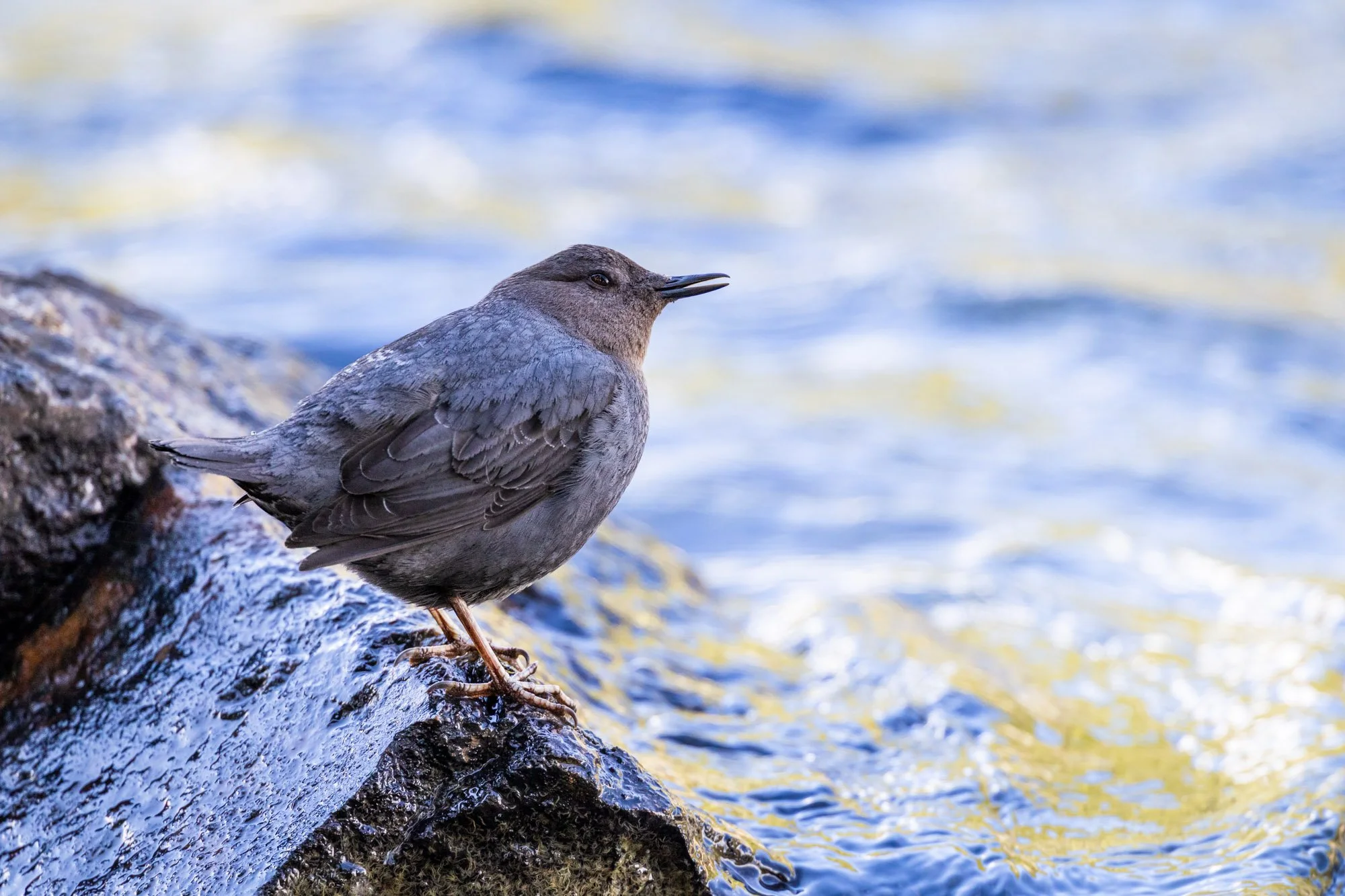
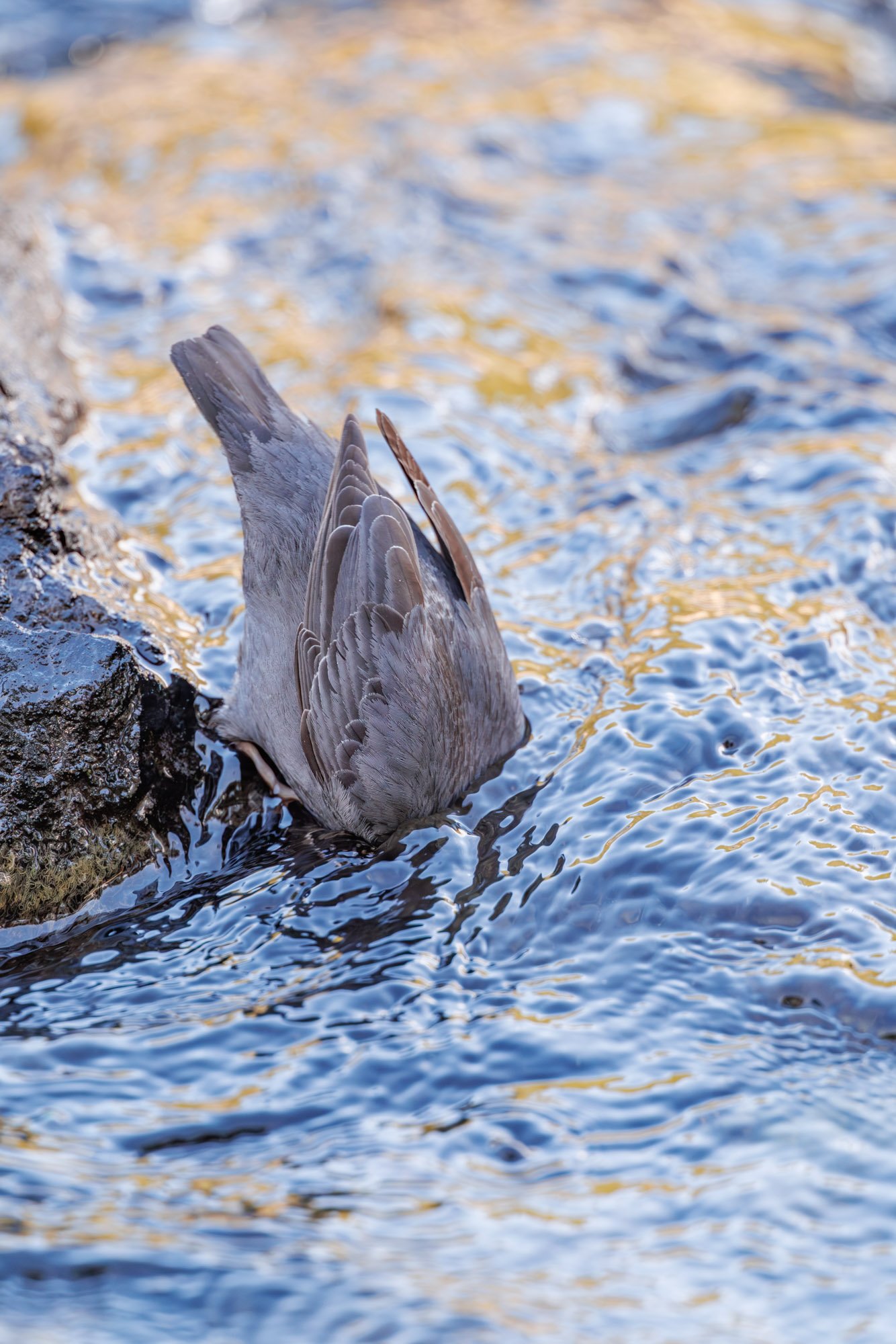
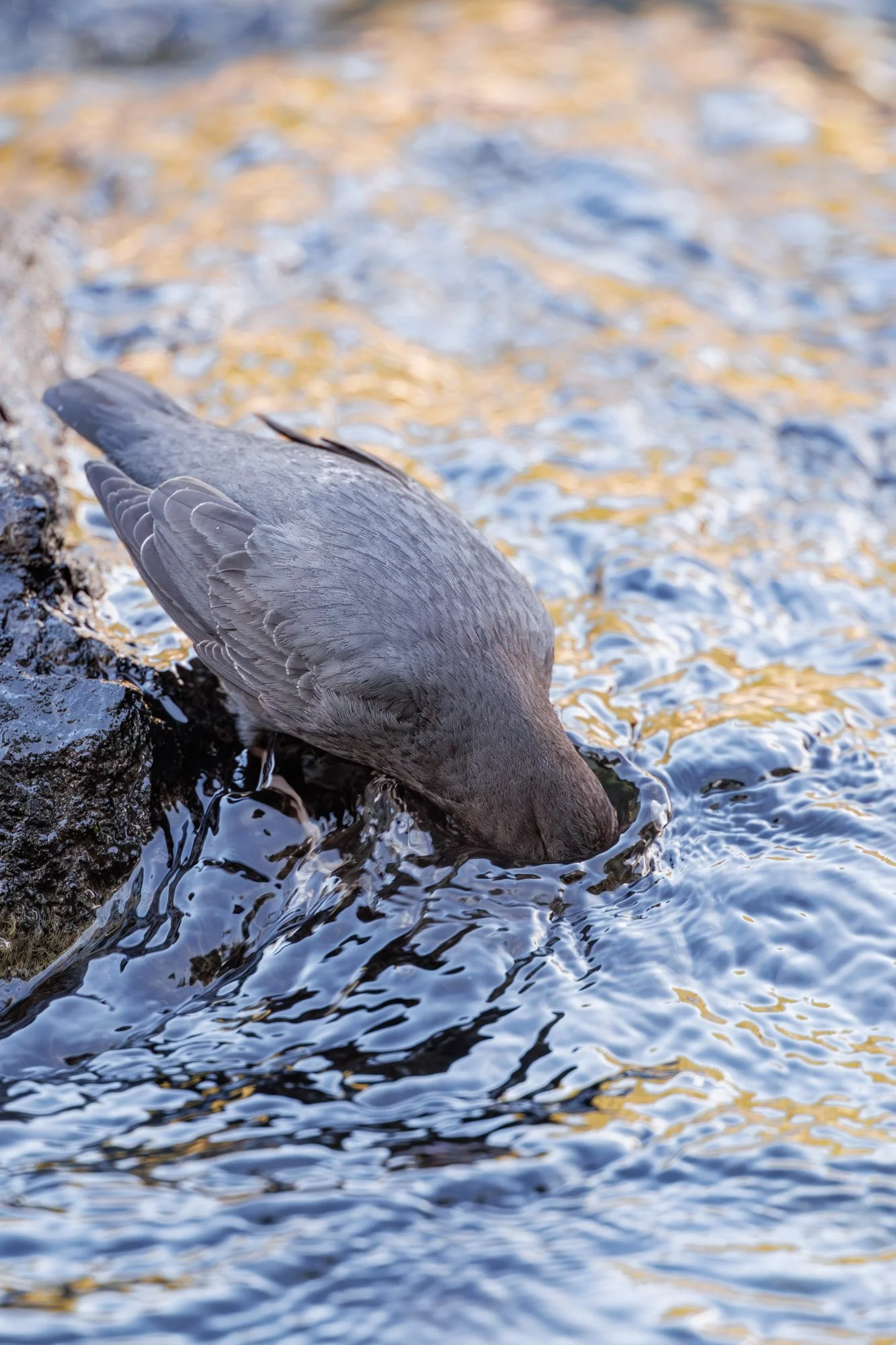
On the way back to the vehicle, the river gave us one last gift: an American Dipper.
If you aren't familiar with dippers, they are extraordinary birds—North America's only aquatic songbird. They don't have webbed feet, yet they walk along the riverbed entirely submerged underwater, hunting for caddisfly larvae against powerful currents. True to their name, they constantly bob up and down on slick, spray-soaked rocks between dives. Watching this tiny songbird navigate the freezing torrents with complete ease was a true highlight of the trip.
Photographing the dipper required a complete shift in technical approach compared to the ducks just a few hundred feet upstream. While I had been trying to capture painterly motion blur in the rapids with the Harlequins, the dipper moved far too quickly and unpredictably for slow exposures. I immediately dialed up my shutter speed to freeze the water, capturing crisp droplets of river spray as the bird popped in and out of the raging current and navigated the slick rocks. Switching tactics so quickly on the fly is one of the things I love most about wildlife photography—you have to adapt your settings to the energy of the subject in front of you.
Ethical Fieldwork Along Raging Rivers
Photographing species that thrive in harsh environments requires extra vigilance. Both Harlequins and Dippers operate on tight energy budgets while foraging in frigid, fast-moving water during critical breeding windows.
Remaining on designated boardwalks and natural perches above the high-water line is essential to avoid crowding the shoreline. Giving them plenty of room ensures they can feed and rest without wasting precious calories escaping human presence, allowing us to capture authentic, stress-free behavior naturally.
Looking Closer at the Wild
While the iconic megafauna often steals the spotlight, sitting by the roaring river and watching these small, resilient birds thrive in extreme conditions was a powerful reminder of why I love wildlife photography. It takes patience, adaptability, and a willingness to slow down and look closer at nature's subtle, often-overlooked moments.
Whether it’s tracking shorebirds on Florida beaches or following specialized species through mountain rapids, every trip brings a new lesson in staying flexible behind the lens.
👉 Explore the Spring in Yellowstone portfolio or read about my first trip to the park here.
Want to follow along on future trips and behind-the-lens stories? Subscribe to the newsletter below to get the latest field notes delivered straight to your inbox.